How to Improve Banking Processes using Workflow Management Software?

According to recent developments in the banking industry, the concept of hyperautomation is gaining prominence. Hyperautomation refers to the integration of advanced technologies such as artificial intelligence, machine learning, robotic process automation (RPA), and natural language processing (NLP) to automate and optimize complex business processes. By incorporating hyperautomation into the banking sector, financial institutions can further enhance their operational efficiency and improve customer experiences. Let’s explore how hyperautomation can address the challenges mentioned in the existing article.

Now, financial institutions around the world have many processes that are regulated by rules. These rules change often depending upon the economic situation of the country. Banks have to satisfy compliance rules that have been set in place. Every transaction and process have to be tracked, executed and recorded. This increases the load on banking staff who have to work on countless spreadsheets and ensure they are true to their data. Process consistency has to be maintained no matter how complex the process is, which thereby increases the labor costs. Therefore, banks and financial organizations are spending a lot of money just to compile the information and construct the data. No access to real-time data, human errors and incorrect information costs money to the financial institutions. 

Related article: The Role of Generative AI in Loan Origination System

Why Do You Need to Automate the Banking Process?

The introduction of automation in the banking process will increase overall productivity, reduce costs, enhance customer experience, and pave the way for hyperautomation—a transformative approach that combines advanced technologies to streamline operations and achieve unprecedented levels of efficiency. Let’s discuss how workflow automation and hyperautomation will have a great impact on the various shortcomings of the banking sector.

Disparate Data systems: 

Hyperautomation can help address the inefficiencies caused by disparate data systems in banking processes. By leveraging AI-powered tools and technologies, financial institutions can integrate and automate data collection, compilation, and integration processes. These tools can consolidate and clean up large volumes of data, ensuring accuracy and reliability. Hyperautomation enables real-time data access and analysis, providing valuable insights for decision-making.

Low Productivity: 

Hyperautomation significantly improves productivity in banking processes. By automating repetitive and time-consuming tasks, employees can focus on higher-value activities that require human intervention. Workflow automation eliminates manual errors and streamlines processes, allowing employees to complete tasks more quickly and efficiently. This leads to increased productivity, reduced work pressure, and improved work quality.

Adhering to Compliance

Compliance with regulatory requirements is critical in the banking sector. Hyperautomation can play a vital role in ensuring adherence to compliance laws and regulations. By incorporating predefined compliance rules and regulations into automated workflows, financial institutions can minimize the risk of non-compliance. Hyperautomation tools can track, execute, and record transactions and processes, providing transparency and auditability.

Scalability

During periods of high demand or sudden influx of processes, scalability becomes crucial. Hyperautomation enables financial institutions to handle increased volumes of transactions and processes with minimal errors. Automated workflows can adapt to fluctuating workloads, ensuring smooth operations during peak hours. This scalability reduces manual errors, maintains productivity, and mitigates wastage costs.

Related article: Increase Banking CSAT with Conversational AI Chatbots in 2023

Use Cases/Examples of Hyperautomation in Banking:

Customer Service

Hyperautomation facilitates improved customer service through the use of conversational AI chatbots. These chatbots, integrated with workflow automation, can handle low-priority customer queries, reducing waiting times and improving customer satisfaction. They can access relevant data, provide accurate information, and escalate complex issues to human agents when necessary.

KYC Process

Hyperautomation streamlines the Know Your Customer (KYC) process by automating data collection, screening, and validation. By leveraging RPA bots, banks can process customer data from various sources, verify identities, and generate reports with minimal manual intervention. This reduces costs, increases productivity, and ensures compliance with regulatory requirements.

Accounts Payable

Hyperautomation can digitize and automate the accounts payable process by utilizing OCR technology. This enables the extraction of data from invoices, verification, and processing, leading to faster and more accurate payments to vendors. By automating this monotonous process, financial institutions reduce manual effort and improve efficiency.

Card Management

Workflow automation can be applied to various card management processes, including debit and credit card processing, card replacement, charge reversal, billing, and card blocking. By automating these processes, financial institutions can enhance cycle times, improve customer experiences, and reduce the workload on employees. Automation also enables faster handling of customer feedback and increased transaction processing capacity.

Related article: 11 Important Banking Processes to Automate with Workflow Management Software in 2022

How does Autonom8’s workflow management software improve the Banking processes?

Our integrated platform at Autonom8 aids in automating business processes, including the emerging concept of hyperautomation. Hyperautomation refers to the combination of advanced technologies such as artificial intelligence, machine learning, robotic process automation (RPA), and natural language processing (NLP) to streamline and optimize workflows.

Banks can leverage hyperautomation capabilities through our workflow management software to enhance their operations. Here’s how:

1. Intelligent Chatbots and Automation Workflows:

Autonom8’s software utilizes chatbots and automation workflows to automate customer journeys. With the power of hyperautomation, these chatbots can understand and respond to customer queries, perform account-related tasks, and even provide personalized recommendations.

2. Data Analytics Tools:

Our platform incorporates data analytical tools that leverage hyperautomation to extract valuable insights from the vast amounts of banking data. By applying machine learning algorithms and predictive analytics, banks can identify patterns, detect anomalies, and make data-driven decisions to optimize their processes and improve customer experiences.

3. A8Chat for Enhanced Customer Engagement:

Customers can engage with our chatbots effortlessly through A8Chat. This intuitive interface allows users to converse with the bots, inquire about banking services, and receive real-time assistance. The hyperautomation capabilities of A8Chat ensure efficient handling of customer queries and seamless integration with backend systems.

4. Streamlined Document Processing:

Autonom8’s chatbot platform goes beyond simple interactions and incorporates hyperautomation for document scanning and image recognition. It employs advanced algorithms to identify sensitive information, mask it appropriately, and verify the accuracy and completeness of submitted documents. This reduces manual effort, improves data security, and enhances the efficiency of document processing in banking workflows.

5. Centralized Account Management:

Our software offers a comprehensive dashboard that integrates A8Chat and A8Flow. Through this dashboard, customers can conveniently manage multiple accounts and track the various stages of their mortgage process. Hyperautomation streamlines the account management process, ensuring quick and accurate updates, and facilitating seamless communication between customers and banking personnel.

 summary:

Autonom8’s workflow management software empowers with hyperautomation in banking capabilities, revolutionizing their processes. By leveraging advanced technologies, such as chatbots, automation workflows, data analytics, and document processing, our platform enhances customer engagement, improves operational efficiency, and drives better decision-making in the banking industry.


FAQs on Banking Workflow Management

What is Bank Workflow Management?

A bank workflow management software allows you to automate business processes by defining how to perform tasks and when they should be performed. The entire process is determined and each task is defined as a step in the workflow.

Which Banking Workflows Can Be Automated?

1. Loan processing
2. Account closure process
3. Know Your Customer(KYC)
4. Anti-Money Laundering(AML)
5. Accounts payable
6. Credit card application processing
7. Fraud detection
8. General ledger
9. Mortgage processing
10. Bank reconciliation

What is a Banking Customer Journey Map?

Customer Journey Mapping helps us understand what customers are doing when using our services. It can also let us identify potential areas of improvement and anticipate new ways to improve our service with the customers.

What is a Customer Journey Automation in Banking?

Customer journey automation in banking sets a predefined route to aid customers with any help that they may need. It helps in improving customer engagement, messages and other interactive features. It enhances the customer experience using tools that assess and enhance your data with programs to provide relevant timely targeting and communications.

How Automation is Changing the Banking Industry?

Bank workflow management software allows banks and financial institutions to offer better customer service with reduced human effort. BPM software mitigates various risks by automating processes that need human intervention. Compliance costs are also reduced by automating manual tasks.

How can schools improve the admission process for students post COVID?

Students have had it rough. With the COVID-19 pandemic raging in the past 2 years, they dealt with the unknowns of going through college online for the first time. Unfortunately, they also did not experience any of the good things about going to campus life.

Schools have not had it easy either. At this time of writing, schools and universities are now preparing to ease students back to the campus. However, with mask mandates in force and social distancing protocols still in effect, faculty and administration find it hard to cope with the volumes of requests that have come flooding in. From financial aid queries, locating student resources, and school onboarding, faculty and staff spend a considerable part of the day dealing with the volume of inquiries.

In such times, automating critical aspects of your student workflows is a crucial enabler to empower your school administration. Hyperautomation, a technology that combines artificial intelligence (AI), machine learning (ML), and robotic process automation (RPA), can revolutionize the way schools and universities manage their operations.

Student Applications and Admissions

The application and admission season is a long and time-consuming process for administration staff. The school or university intake process may or may not be seamlessly connected to your evaluation system. Once the evaluations are complete, university staff have to issue admits to successful applicants and send out response letters to all applicants. If all these different systems are not stitched together, admin staff usually spend a lot of time and resources to get a coherent student experience together.

Hyperautomation solutions like the A8Studio platform combine AI, ML, and RPA to create a seamless application workflow that can provide a single pane of glass experience to your applicants, across all the stages of the application process, from intake to evaluation, to additional documentation, all the way to the final response. With A8Studio’s hyperautomation capabilities, your applicants would never be kept in the dark about their application status, with A8Chat providing your university staff with the ability to stay connected with your applicants on whichever channel they prefer, i.e., web, mobile, or even WhatsApp.

Student Registration and Financial Aid (FAFSA)

Once the initial application process is finalized and approved, then the real struggle for students begins. University tuition fees are a substantial component of college expenses, which compels students to start looking for financial aid early in the process. The process to avail of FAFSA, i.e., Federal Student Aid or any other loan or grant, could be overwhelming for any new student. It also depends on the awareness levels of the student, and International students usually end learning about all their options a little too late in their process and end up missing opportunities to avail aid from the start of their tenure.

Again, hyperautomation solutions like the A8Studio platform can fully empower your faculty and staff to assist students in their time of need. Using A8Chat to inform students of the eligibility and timeline requirements and tying it back with A8Flow to grant workflows allows your university or college to easily make financial aid options available to all students.

Course Recommendation and Transfers

Students go through multiple courses in their college stint, but choosing their course to accrue learning credits is a process they usually fine-tune over several conversations with their counselor and professor. Coupled with the fact that so many new avenues have opened up in recent years as relevant career paths, students spend more time in analysis paralysis to decide which courses will set them up for success in their learning journey.

Hyperautomation solutions like A8iQ could learn from course recommendation patterns provided by faculty and staff and ease the process of reviewing and selecting an optimal learning path for students. These insights surfaced through A8Chat could reduce student anxiety while allowing professors to spend more time interacting and guiding the students through these chosen paths.

Graduation and Alumni Relations

Many universities may have aspirations to stay connected to students through graduation and beyond with alumni relations and programs. But these aspirations are usually translated into email newsletters, which may not be the most compelling form of engagement. A8Chat could engage with graduates and the alma mater in any communication channel of choice, allowing university admins to reach out to alumni to engage in real-time interactions. For college recruitment, fundraising, and alumni programs, A8Chat coupled with A8iQ can provide your university the soapbox it needs to talk about its activities to its latent audience and analyze if outreach efforts are working well in a tangible fashion.

A8Studio: Give Your Faculty and Admin Super Powers

These possibilities are a tiny peek into what the A8Studio platform, powered by hyperautomation, unlocks for your institution to welcome, interact, and stay engaged with your students throughout their lifecycle. Schedule a demo with us today to find out how Autonom8 can give your faculty and staff the firepower they need in this back-to-school season.

Streamline ITSM with Intelligent Virtual Assistants

As your organization grows, it becomes critical to give your employees timely technical support. This is normally accomplished with an IT Helpdesk. However, your staff faces a few challenges…

  1. Repetitive, time-consuming tasks
  2. Long resolution times resulting in lost issues & problematic workarounds
  3. Challenges keeping track of employee assets
  4.  Requests arriving on multiple channels in a variety of forms
  5. Lengthy training periods for new employees 

Did you know that 45% of your employees spend 3+ hours a week just searching for information within the workplace?

Intelligent Virtual Assistants can play a substantial role in addressing these challenges. Advances in AI have fueled improvements to our work environment, the way we communicate with others, and in the tasks we do. In the digital ecosystem, real-time user engagement is key to gain a competitive advantage and deliver a great experience. IT users are no longer willing to fill up a lengthy ticket form and wait for hours to get a response.

Artificial Intelligence has already made its mark in Customer Support and this is now extending to  IT support and IT Service Management (ITSM)

Virtual Assistants (aka chatbots) are one of the leading applications of AI that have demonstrated significant promise.

Industry reports estimate $8Bn in annual savings from chatbots, with 80% of businesses considering implementing them.

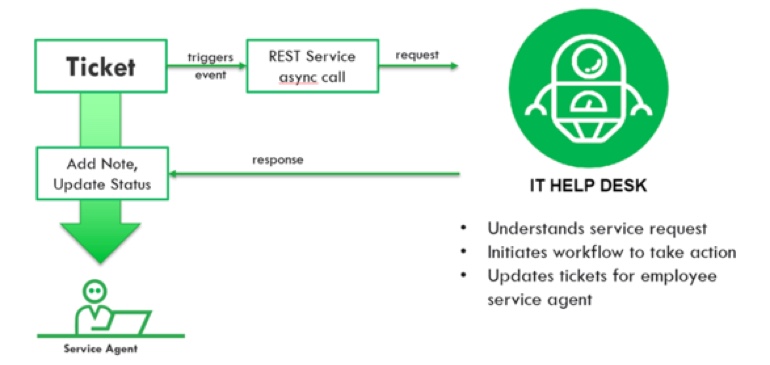
Automation is a priority among IT leaders today. IT support chatbots improve overall ITSM efficiency and productivity by handling routine employee issues much faster

  • Chatbots deflect trivial tickets sent to IT Support staff. 
  • Chatbots interact with users through a conversational interface to address queries faster and are available 24/7. 
  • Chatbots are programmed to learn from past encounters and they continuously evolve.

IT Support bots will dramatically increase productivity and user satisfaction while working in conjunction with your staff to create a cohesive support experience for the user.

Hyperautomation, the combination of robotic process automation (RPA) and artificial intelligence (AI), can further enhance the capabilities of IT support chatbots. By integrating hyperautomation into the existing ITSM processes, organizations can achieve even greater levels of efficiency and automation.

it support bot
Source: https://chatbotsmagazine.com/the-3-essentials-of-ai-bots-for-it-help-desk-9bce2ffa4446

Related article: How to Use ChatGPT to Enhance Your Customer Experience

Let’s see some significant use cases of ITSM chatbot

 ITSM chatbot

  1. Better self-service: Chatbots provide scalability and self-service. Chatbots increase the ability of employees to handle trivial issues on their own with minimal assistance. The chatbots, powered by hyperautomation, can automate complex workflows, retrieve information from various systems, and provide intelligent recommendations to users, thereby improving the quality of support and reducing response time.
  2. Ticket assignment: Categorizing and assigning tickets can be laborious if done manually. Chatbots, enhanced with hyperautomation capabilities, simplify this by automatically classifying incoming requests and learning from past cases. They can leverage AI to analyze the content of the ticket, extract relevant information, and route it to the appropriate IT Support person, along with the conversation history, ensuring faster and more accurate ticket resolution.
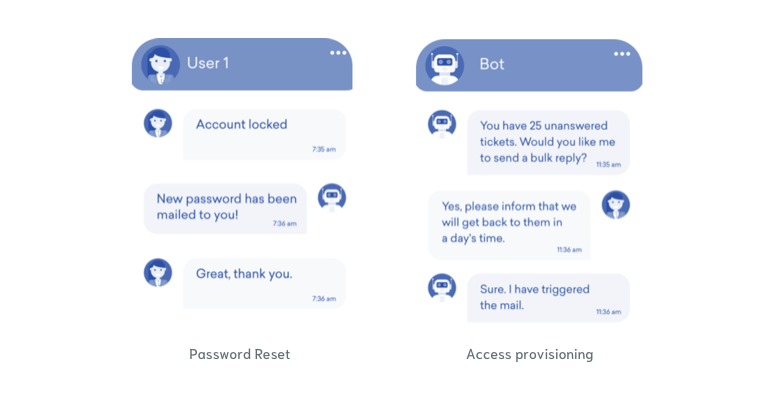
  3. Password reset: Your IT support team spends a large amount of time handling this repetitive task. A chatbot empowered with hyperautomation can resolve password reset queries with ease. By integrating with identity management systems, the chatbot can securely authenticate users and initiate the password reset process, reducing the burden on IT staff and enabling users to regain control of their accounts effortlessly.
  4. Access provisioning: This is a common request in IT departments where an employee requests access or removal of access from a particular resource. Chatbots, leveraging hyperautomation, can facilitate this process by understanding the type of request, verifying user permissions, and automating the underlying workflow to service the request. This streamlines access provisioning and ensures adherence to security policies.

Companies have reported 65% fewer support tickets, a 40% reduction in average handling time, and a 35% decrease in response times with the use of an ITSM AI-bot empowered by hyperautomation

Benefits of IT helpdesk chatbot and hyperautomation:

Benefits of IT helpdesk chatbot

55% of all large enterprises will deploy chatbots in IT support to increase work efficiency by 2020” – Gartner

Summary

Deploying Intelligent IT support Virtual Assistants empowered by hyperautomation does not mean replacing human executives; it simply means reducing the effort taken by technicians while simultaneously increasing the effectiveness of operations to elevate the customer experience. Employees in an organization would appreciate it more if their tickets got resolved faster and effortlessly rather than waiting for days to get a simple issue resolved. A8Chat is an AI-powered, enterprise-grade Virtual Assistant that can learn, adapt, and evolve based on the growing needs of your employees and your IT Helpdesk. By incorporating hyperautomation, Autonom8 ensures that the Virtual Assistant is equipped to automate complex processes, provide intelligent recommendations, and deliver a seamless support experience. Schedule a demo with Autonom8 to learn more about how hyperautomation can revolutionize your IT support.

Intelligent bots can now screen candidates – the rise of the Recruitment Chatbot

In 1950, Alan Turing predicted that by the year 2000, computers would be able to pass as humans during a text conversation. While that prediction hasn’t quite materialized, chatbots have come a long way in the past few years. In addition to conversations, chatbots can now help your HR team recruit new employees. The ever-growing HR tech has evolved with the rise of recruitment bots and hyperautomation.

How can the adoption of recruitment chatbots benefit HR?

Recruitment chatbots, a key component of hyperautomation in HR, can help address the challenges typically faced by hiring teams. These chatbots automate various aspects of the recruitment process, providing several benefits to HR professionals:

recruitment chatbots

Making a quick hire

Hiring teams are expected to recruit candidates quickly. Vacant positions cost money and delay operations. Multiple rounds of interviews need to be conducted before deciding to recruit a candidate. This involves coming up with the right set of questions to assess the candidate after a thorough analysis. From screening to personal interviews, hiring teams are challenged to do this manually & simultaneously for multiple candidates.

Engaging qualified candidates

With hiring teams being busy most of the time, there could be delays in following up with select candidates. Qualified candidates are being contacted by multiple companies and are possibly juggling multiple job offers. It is difficult for hiring managers to maintain timely & sustained contact with candidates, which can lead to losing good candidates.

Creating a good candidate experience

A good candidate experience plays a vital role in whether or not the candidate will accept your job offer. It is the first opportunity a company gets to create a positive impression on the candidate through the hiring process.

Saving time for recruiters

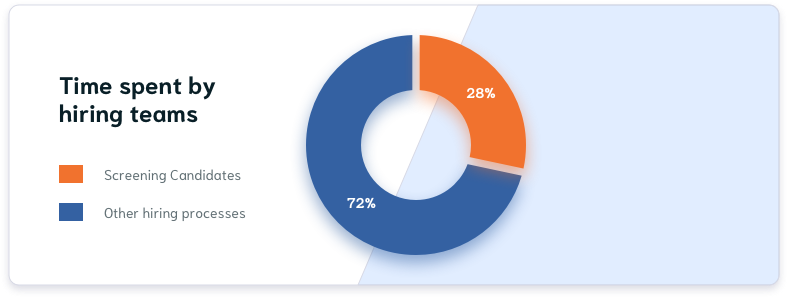
Recruiter time is spent on simple, repetitive tasks mostly concerning the initial screening process. Recruiters have to manually ask similar questions to multiple candidates and evaluate each response before the next round. Administrative tasks (like scheduling interviews) further cut into valuable time that recruiters could have used in coordinating the hiring process and ensuring a good candidate experience.

Ensuring an efficient recruitment process

Recruitment teams need effective communication, easy candidate evaluation, and comprehensive visibility throughout the hiring process. Coordinating all these aspects manually can be challenging. With hyperautomation, recruitment chatbots streamline communication, provide real-time updates, and facilitate seamless coordination between recruiters, candidates, and other stakeholders. This ensures a more efficient and well-managed recruitment process.

Time spent by hiring teams

Let’s take an example. In a high volume hiring process, recruiters are always on phone calls making sure they’ve received all the right information and double-checking the answers to questions like: “Are you able to work in the country?”, “Have you worked in this industry before?” or “Are you looking for full time or part-time roles?”.

What if recruitment process could be automated? This is where recruitment chatbots come in. Bots can efficiently follow up with candidates and ask the right questions.

Recruitment chatbots provide time-saving benefits for both recruiters and candidates.

Candidates prefer interacting with a chatbot

A survey by Allegis concluded that 58% of candidates were comfortable interacting with AI and recruitment chatbots in the early stages of the application process, including interview scheduling, and preparation.

Candidates understand that the recruiting process might not be person-to-person at every touchpoint, but value the chance to receive information efficiently. As that attitude continues to evolve, so will the benefits of recruitment bots.

A chatbot can save time for recruiters

Estimates predict a chatbot can automate up to 80% of top-of-funnel recruiting activities. According to SHRM, the average cost of hire is $4,129 and the average time to hire is 42 days. By automating a large part of qualifying and scheduling, a recruitment chatbot can dramatically lower both cost of hire and time to hire. If a recruitment chatbot can more quickly screen out unqualified candidates, recruiters can focus their efforts on high-value activities: creating connections and building relationships with interested candidates.

A chatbot can assist with administrative tasks

  • collect information from candidates such as their resume, contact information, and documents e.g. work authorization
  • ask screening questions about candidates’ experience, knowledge, and skills
  • rank candidates on metrics such as qualifications, education, or specializations
  • answer FAQs about the job and the application process
  • schedule in-person interviews
Recruitment Chatbot
Recruitment Chatbot

All of this information can be collected simultaneously, in automated ways, from hundreds to thousands of candidates. It can then be fed into the ATS (Applicant Tracking System) or sent directly to a human recruiter to follow up.  

Let’s talk about returns.

What is the ROI on recruitment chatbots?

Less time spent interviewing

Studies say better-screened candidates decrease time spent interviewing by 40% for the same number of hires.

Average time saved per hire

2.4 hours per hire is saved on average by using a chatbot in your system.

The value in dollars

2.4 hours x 1000 hires/year = 2,400 hours. Average recruiter salary is $38/hour. That is 2,400 hours x $38/hour = $90,000 in savings.

The main benefits of using a recruitment chatbot include automating top-of-funnel recruiting tasks such as candidate pre-qualification and interview scheduling to speed up time to hire and improve candidate experience. Over time, the machine learning capabilities of the recruitment bots can automatically identify which metrics it should be looking for and rank candidates accordingly.

Summary

Recruitment chatbots, a vital aspect of hyperautomation in HR, can help overcome challenges faced by hiring teams and improve efficiency by automating candidate screening and engagement. A8Chat from Autonom8 is an example of a recruitment bot that can rapidly design and deploy candidate experiences. These chatbots seamlessly integrate with ATS and calendaring tools while also supporting internal processes like onboarding. As a part of the hyperautomation trend, A8Chat offers learning and continuous improvement, resulting in increasing ROI over time. By freeing hiring teams from mundane tasks, recruitment chatbots enhance the overall recruitment process and deliver better candidate experiences.

A8Chat comes with the ability for learning & continuous improvement, with RoI that rises over time. A8Chat frees your hiring team from mundane, repeatable tasks. Schedule a demo with Autonom8 to learn more.

How streamlining patient check-in system can improve efficiency

As a care provider, the patient check-in process is one of your first opportunities to deliver an outstanding patient experience. Proper management of patients, appointments, and doctor availability can help streamline this critical interaction. When done poorly, the result is a bottlenecked patient check-in system, delayed appointments, and crowded waiting rooms – to the detriment of the patient experience

What are the challenges in the existing patient check-in system?

The patient check-in system is a vital touchpoint and an opportunity to make a good first impression. Care providers face many challenges in the existing patient check-in system, which can be addressed through hyperautomation.

patient check-in system
  1. Front office efficiency – Front office staff have many responsibilities including supply provisioning, new patient registration, managing patient queues, and responding to inquiries. Many of these processes can be automated to save time. For example, routine and after office hours inquiries can be handled by a healthcare chatbot powered by hyperautomation technology, which combines artificial intelligence (AI) and robotic process automation (RPA) to automate repetitive tasks and improve efficiency.
  2. Smooth patient flow – Maintaining a smooth patient flow is an important challenge. As appointments are stacked one after the other, any delay in one appointment can cause a cascading effect on all the rest. Hyperautomation can help address this challenge by automating processes such as patient check-in and notification systems. By implementing intelligent workflows and utilizing virtual assistants powered by AI, the patient flow can be managed more efficiently, reducing delays and minimizing disruptions.
  3. Patient communication – Transparent and timely communication between hospital staff and patients is significant in every step of patient care. Hyperautomation can enhance patient communication by automating reminders and notifications. For example, automated appointment reminders can be sent to patients via SMS or email, reducing the risk of no-shows. Furthermore, hyperautomation can enable seamless access to patient records, ensuring that doctors have access to necessary reports and information from previous appointments, improving overall patient care.

Current patient check-in processes have a lot of room for error and inefficiency. Hyperautomation, with its capabilities to automate repetitive tasks, improve workflows, and enhance communication, can revolutionize the patient check-in system. By implementing an automated patient check-in system with intelligent workflows and virtual assistants powered by AI and NLP, the patient journey can be eased, resulting in benefits for both patients and care providers.

patient check-in system

Let’s examine an ideal patient check-in process

Flexible appointment scheduling:

A smooth appointment scheduling process is the first step to streamlining the patient check-in process. Patients should be offered multiple channels of communication. Hyperautomation can play a crucial role in automating the appointment scheduling process across various channels.

  1. Online: The patient interacts with an online calendar, negotiates their preferred date/time, and books the appointment. Hyperautomation technologies can automate the appointment booking process, allowing patients to easily schedule appointments online.
  2. Email: Some patients use email to request an appointment. This is normally followed by a callback to nail down appointment details. Virtual assistants powered by hyperautomation can automate the process of extracting the patient’s request and scheduling a callback, providing a seamless experience for the patients.
  3. Phone: Although there are online options available, some patients still prefer calling to get information or schedule an appointment. Automated agents powered by hyperautomation can service these requests with technology that can handle voice interaction, improving the efficiency of the phone-based appointment scheduling process.
  4. In-hospital kiosks: Patient self-check-in kiosks enable patients to schedule appointments via interactive touch screen systems and self-service, powered by virtual assistants leveraging hyperautomation technology.

Checking for prerequisites:

Hyperautomation can streamline the process of checking prerequisites by automating tasks such as insurance eligibility checks. By integrating with relevant systems and databases, hyperautomation can quickly verify insurance information, reducing the administrative burden on staff.

•Automated appointment reminders can also be implemented through hyperautomation to minimize no-shows. By leveraging AI-powered algorithms, appointment reminders can be sent to patients via their preferred communication channels, improving patient attendance rates.

Transparent check-in policies:

Well-documented instructions ensure a happier patient experience. Hyperautomation can assist in documenting and communicating check-in policies effectively. By automating the distribution of check-in policies, patients can be informed of important information such as treatment of late arrivals, appointment cancellation or postponement procedures, and logistics (e.g., parking).

Centralized management:

Hyperautomation enables centralized management by utilizing the same system of record for staff and patients. This simplifies tasks and ensures that everyone is on the same page. Real-time updates can be made to communicate information such as patient status (waiting, consultation in progress, completed) or room status (availability, access), improving overall coordination and efficiency.

Reduced burden on caregivers:

Caregivers have to deal with a continuous stream of inquiries. Clear guidelines for appointment duration, doctor availability, and working hours should be set beforehand so that their tasks can be completed efficiently. Hyperautomation can assist in optimizing scheduling to minimize caregiver burden. By utilizing data and algorithms, hyperautomation can recommend optimal appointment durations, assign doctors based on availability, and provide adequate breaks between appointments, resulting in improved efficiency for caregivers.

Minimize patient wait time:

Hyperautomation can help minimize patient wait time by leveraging data and algorithms to anticipate a patient’s appointment time based on their condition. By reducing overbooking while accounting for no-shows and allowing for emergency appointments based on known patterns, the patient flow can be optimized, resulting in reduced wait times and improved patient satisfaction.

An improved patient check-in process, empowered by hyperautomation, is beneficial to both patients and care providers. By automating tasks, improving workflows, and enhancing communication, hyperautomation can revolutionize the patient check-in system, delivering a smoother and more efficient experience for all stakeholders.

patient check-in system

patient check-in system

Summary

We have suggested various approaches to streamline the patient check-in process and related activities, incorporating the concept of hyperautomation. As a care provider, these approaches, enabled by hyperautomation technology, will help you increase patient comfort and convenience when they need it most. By leveraging the power of hyperautomation, coupled with analytics and learning, you can transform the patient journey and enhance the staff experience, ultimately making lives better and healthier. Talk to us at Autonom8 to learn how to rapidly digitize and enrich the patient journey with hyperautomation.

WhatsApp chatbots in insurance: the hidden potential of personal messaging

WhatsApp chatbots – unchartered territory for insurance

One out of every five adults in the United States uses Whatsapp for personal messaging. According to Statista, WhatsApp is only behind Facebook Messenger and Snapchat in the US, with 26 million Monthly Active Users (MAU) and growing. More than 60 percent of the user base opens the app several times a day, mostly to talk to family and friends. This highly engaged user base, along with the lack of ads in this part of the Facebook ecosystem, has made WhatsApp a substantial untapped area for companies of all sizes. Whatsapp for Business was launched in 2018 by Facebook to do exactly that – to help verified enterprises interact with customers in an innately personal way, as compared to traditional digital touchpoints like email, call centers, or live chat.

Insurance companies worldwide are no exception. With digital-first insurance startups (or insurtech companies as they are widely called) processing claims in seconds instead of days, venerable insurance majors have had no choice but to adopt fast-moving digital strategies to stay relevant. In a bid to position themselves with a digitally savvy customer audience, insurance companies (especially non-life insurers) have been increasingly curious about Whatsapp chatbots to meet their customers, where they are.

WhatsApp chatbots
WhatsApp chatbots and Hyperautomation

Executive rundown: WhatsApp chatbot use cases

If you are an insurance company looking to implement a Whatsapp chatbot for your business, we understand it is overwhelming to understand how to make this chatbot play succeed. To solve this problem, we put together the most compelling use cases you would seek to implement on this platform, based on an industry report from Cognizant.

Personalized lead generation

As mentioned above, Facebook has a no-ads strategy in the WhatsApp ecosystem. This fact, coupled with user identification being driven by the phone number on the account, means that the user has complete control over the way communication is initiated. It also means any visitors on your existing digital platforms have to opt-in to use Whatsapp.

These insights make it a very high intent inbound platform whitelisted for communication, where marketers can engage with the customer in a personalized way. Using the WhatsApp for Business API, companies can create attributable short links, segment customers using custom labels, and also generate broadcast lists for specific messaging.

Now companies can personalize messaging for leads generated on this channel down to the individual and accurately assess underwriting and risk when your customers engage with you on the platform. It also enables cross-selling highly relevant insurance products at relevant lifecycle events for a customer with a very high success rate.

Instant policy and renewals processing

WhatsApp has a very high user engagement volume with the highest message open rates worldwide for any marketing channel. For insurance companies, this means that there is a significant opportunity to regularly interact with the customer to speed up essential processes.

Processes that took days over multiple channels (email/phone/web) to process a single policy document can now be done seamlessly in real-time with customers over a WhatsApp chatbot assistant. If your chatbot platform also integrates with all your underwriting-driven business processes behind the scenes, documentation requests, and insurance policy quotes can be made available to the user in their platform of convenience.

Claim Handling

Submitting First Notice Of Loss (FNOL) queries and processing claims in the traditional non-life insurance model used to take days to resolve. Lemonade and other insurtech companies have turned that perception on its head by providing world-record claim resolution and disbursal timelines in seconds for most claim queries. If your company is looking to bump up claim and disbursal timelines, then integrating a WhatsApp chatbot capability to your AI-driven platform to expedite the First Notice Of Loss (FNOL) process will speed up processing claims. Click here to know more about how A8 chat for financial services helps.

Lifecycle management

Customers regularly update their lifestyle habits, thanks to the increasing convenience of the gig economy to work, live, and travel anywhere. Insurance companies have continuously tried to catch up to these lifecycle events, but the lack of agility in their existing business processes holds them back. By deploying WhatsApp chatbot capabilities, your insurance company can now engage with the customer at any time, allowing them to update, renew, and close their policies without having to leave their chat window.

Hyperautomation for efficiency and scalability

Incorporating hyperautomation into WhatsApp chatbot workflows can further enhance the efficiency and scalability of insurance operations. Hyperautomation combines advanced technologies like artificial intelligence, machine learning, and robotic process automation (RPA) to automate complex processes and tasks.

By leveraging hyperautomation, insurance companies can streamline and automate repetitive and rule-based tasks within the WhatsApp chatbot ecosystem. This includes automating document verification, claims processing, policy underwriting, and customer onboarding. Hyperautomation can significantly reduce manual effort, enhance accuracy, and improve response times, leading to better customer experiences.

Summary

WhatsApp for Business offers untapped leverage for your insurance company to connect, engage, and delight your customer base. Done right, chatbots deployed on the WhatsApp platform, leveraging hyperautomation capabilities, could build the foundation of a long-lasting relationship with your customer, increase brand recall, and improve your company’s NPS scores.

Are you an insurance company interested in implementing any of these use cases? If you are looking for a platform providing all these capabilities, Autonom8 delivers the capabilities you need not just on WhatsApp, but on any conversational chatbot platform with A8Chat.

Are you interested in learning more? Schedule a demo and experience the WhatsApp chatbot integration to A8Chat today.

Conversational AI in banking in an era of social distancing

In times like these where a pandemic has gripped the world, and each of us is staying put in our homes, the bankers are working on the frontline. But with chants of ‘social distancing’ echoing in everyone’s minds, how will it be possible to provide access to everyone of this essential service – Banking? The minute we think of a bank, we can easily associate it to the crowd. In this era where customers want to remain socially distant but still want to be able to carry out banking without a visit to the bank; Conversational AI can be the most feasible, instant and inexpensive way to meet the needs of customers. 

The banking industry has been an early adopter of most technological advancements that have gone on to bring them tremendous growth & customer delight. Banks have an ever-growing customer base who in turn have ever-growing expectations. When Artificial Intelligence came into the picture, it was only a matter of time until the Banking industry began adopting smart banking automation solutions.

conversational ai platform
Source: https://www.salesforce.com/blog/2018/02/consumers-prefer-chatbots-quick-communication-brands.html

Conversational AI in particular has gained a lot of traction in the last few years with chatbots and voice bots. The interactive abilities of Conversational AI can contribute on a large scale to great customer experience. It can carry out smart human-like interactions with customers on behalf of the bank and it’s staff. What’s more? It can converse with millions of customers in a short time and only cost the bank a small fraction of the cost of human agents. 

A report by Juniper Research says that for every query that a chatbot handles, banks save 4 minutes of an agent’s time. This translates to banks saving a cost of 0.70 USD per query. Recent estimations say that the use of Conversational AI in the banking sector will lead to savings of 7.3 billion USD by 2023. This represents a total time saved for banks in 2023 of 862 million hours – equivalent to nearly half a million working years!

The gains for Conversational AI in banking look very promising since Banks are increasingly investing in AI-powered chatbots as a smarter way to acquire, engage and serve customers. The reasons to use chatbots in banking are many – ease of use, cost savings, 24/7 support and even new account generation.

Hyperautomation, the convergence of AI and automation technologies, is playing a significant role in enhancing the capabilities of Conversational AI in the banking industry. Hyperautomation leverages advanced technologies such as natural language processing (NLP), machine learning, and robotic process automation (RPA) to automate complex and repetitive tasks, allowing chatbots to handle more sophisticated queries and provide personalized services.

Related article: Conversational Banking 101: Everything You Need To Know

Key features of a smart banking chatbot

  1. Can provide real-time customer support by carrying out tasks like checking account balance, making payments, card activation or loss /theft recovery.
  2. Can help customers make smarter financial decisions by providing them with actionable insights by analyzing their spending habits
  3. Can leverage the power of NLP to understand customer queries and pick up the solution from its database within seconds
  4. Can easily understand routine queries and FAQ’s about the bank’s wide range of products and services
  5. Can be trained to gradually handle more complex queries over a period of time by continuously analyzing customer feedback

coversational ai banking

These are some of the things that an AI-powered chatbot is capable of doing. With the integration of hyperautomation for banking , chatbots can now automate back-end processes, such as account verification, transaction processing, and data entry, leading to improved efficiency and reduced operational costs for banks.

Let’s see some use cases that are successfully tried and tested in the Banking industry

  1. Customer support by handling customer queries and giving them the solution or redirecting customers to the right person. Banks that have adopted have reported a 40% decrease in calls to customer support.
  2. Lead generation by bots embedded on the websites of banks resulting in a 600% increase in leads among banks who have used this feature
  3. Personal banking assistant to customers, therefore, reducing the need for customers to visit a bank physically and carry out tasks from wherever they are
  4. Feedback collection from customers regarding their interactions with the chatbot has given banks useful insights

A Banking virtual assistant can effectively contribute to the bank’s customer service needs by sending notifications for payment reminders, sharing money-saving tips, banking-related articles, updates on credit scores, and helping with simple transactions. With the integration of hyperautomation, virtual assistants can now automate more complex tasks, such as credit assessments, loan application processing, and investment portfolio management, providing customers with comprehensive and personalized financial services.

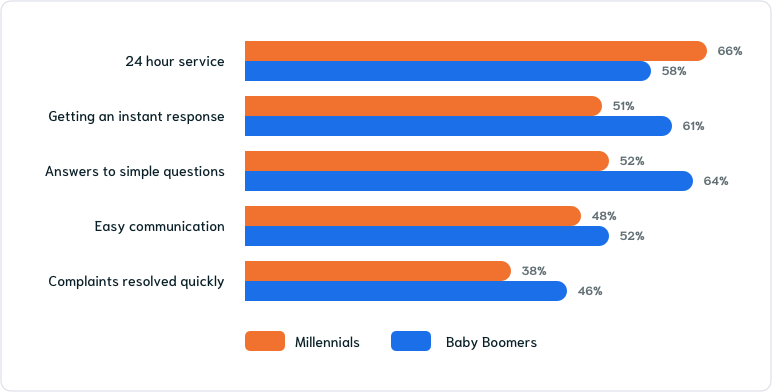
According to Millennials and Baby boomers, what are the top 5 Potential benefits of chatbots?

conversational ai platform
Source: https://www.salesforce.com/blog/2018/02/consumers-prefer-chatbots-quick-communication-brands.html

24-hour service is the biggest benefit of chatbots that both Millennials and Baby boomers see which is obviously quite a huge task to carry out in case of human agents. This is closely followed by getting an instant response and then getting answers to simple questions that do not require a human agent.

Conversational AI, powered by hyperautomation, whether in the form of voice bots or chatbots, provides a unique conversational experience for customers, giving them human-like interactions. Bots are now able to handle more and more complex queries, and their ability to get trained is expanding rapidly. As we already know, banking is a sector that has always been ahead of the curve when it comes to adopting new technology, and Conversational AI with hyperautomation is one such case. In this new era of social distancing, Hyperautomation-powered chatbots can largely help banks interact and engage with their customers in the right way, at the right time. Schedule a demo with Autonom8 to learn more about the transformative potential of Hyperautomation in the banking industry.

Related article: Increase Banking CSAT with Conversational AI Chatbots in 2023

Summary

Conversational AI whether in the form of voice bots or chatbots provides a unique conversational experience for customers giving them human-like interactions. Bots are now able to handle more and more complex queries and their ability to get trained in expanding rapidly. As we already know, banking is a sector that has always been ahead of the curve when it comes to adopting new technology and Conversational AI is one such case. In this new era of social distancing – A8 Chat can largely help banks interact and engage with their customers in the right way, at the right time. Schedule a demo with Autonom8 to learn more.

How to decide on the right chatbot for your banking institution

The burden on the banking care ecosystem in 2020

The COVID-19 crisis has been tough on the US banking sector. As the pandemic dominated its spread across the nation in March, call centers for US-based banks collectively saw a substantial increase, with the larger US banks getting a 40% increase in call volume. These call volumes, coupled with longer wait times, have led US banks to rely heavily on their digital channels. Most banking institutions responded by diverting a substantial portion of their customers to conversational chatbots on their platform, notably Bank of America (Erica) and Capital One (Eno), to solve basic banking queries.

The dilemma of choice with conversational chatbots

However, this is a stop-gap solution to the current pressing needs of banking customers. Most banks are still keeping their branches closed, which means customer support teams have to bear all the incoming support load. Banks hence need to step up their technology prowess to address complex customer queries by using AI and machine learning while ensuring customer value. Banks have looked at integrating cloud-based conversational solutions to get ahead of this situation in recent years. However, the pandemic has compelled the C-suite to look at customer support from a holistic perspective.

Selecting a conversational chatbot platform to integrate into existing banking systems is a persistent nightmare. The compliance, security, and privacy considerations involved can complicate the C-level decision-making process. The guidelines listed below can simplify the process of selection and guide the C-suite into making an informed decision on what an effective conversational AI-driven chatbot platform for their needs should be.

Hyperautomation: Transforming customer support with AI

Hyperautomation is revolutionizing the banking industry by combining artificial intelligence, machine learning, and automation technologies to streamline operations and enhance customer experiences. By adopting hyperautomation, banks can automate repetitive tasks, improve operational efficiency, and deliver personalized customer interactions.

chatbot in banking

Meet the customer where they are

Multi-channel engagement

Conversational platforms, homegrown or procured, have traditionally been a function of the channel – web, mobile or social. Most chatbots for customer care are deployed within an app or website, which compels banking customers to navigate to that channel to get the queries addressed. However, with hyperautomation, banks can extend their conversational chatbots to widely available messaging or social platforms like WhatsApp or Facebook Messenger, meeting customers where they are and providing seamless support across multiple channels.

Context Retention

If the platform supports multi-channel integration, it should carry over context seamlessly across channels. A customer can start talking about a fee dispute on their desktop web browser, start traveling, and then chat with banking support over WhatsApp on-the-go. The chatbot platform needs to be able to resume the conversation seamlessly, without losing context. Hyperautomation enables context retention, ensuring a seamless customer experience regardless of the channel they use.

Related article: Increase Banking CSAT with Conversational AI Chatbots in 2023

Own the customer journey, not just the chat interaction

Most conversational chatbot platforms integrate into existing CRM and banking systems and can surface only pertinent information about support queries in a rule-based fashion. However, with hyperautomation, banks can go beyond basic rule-based interactions. The chatbot platform can intelligently integrate into the end-to-end customer journey by holding the context of the entire triaging process in the conversation. Essential milestones in resolution can be transparently made visible in the chat conversation, providing customers with real-time updates and fostering trust and engagement in the issue resolution process.chatbot in banking sector

Be the intelligent concierge to the care agent team

Care agent teams are already bearing the immense load of the call volume in the current crisis. With hyperautomation, the chatbot platform can act as an intelligent concierge to the care agent team. By leveraging AI and machine learning, the platform can learn from past successful resolutions handled by human agents. The chatbot can be trained to solve similar issues at scale across multiple conversations, reducing subsequent call deflections to human care agent teams and alleviating their workload. Additionally, the platform should enable seamless communication between care agents and the chatbot, creating a collaborative environment and allowing the care agent team to focus on more complex issues.

Summary

These guidelines, combined with the power of hyperautomation, should assist executive decision-making for any banking institution, regardless of size and customer market. As banks try to adjust to a post-pandemic world, a well-chosen conversational chatbot platform empowered by hyperautomation would become their crucial business enabler to providing a white-glove customer experience.


Did you find these guidelines helpful? If you are looking for a platform providing all these capabilities, Autonom8 provides the only conversational chatbot platform your bank will ever need – A8Chat.

Are you interested in learning more? Schedule a demo and experience A8Chat today.

How to improve customer experience (CX) using call center chatbots

Call centers are high-pressure environments. In a 24×7 world, your customer support agents are perpetually overloaded.  In most cases, customers detest IVRs and want to reach a live agent quickly.  Added to this calls into a call center come in peaks and valleys leading to long wait time during peak hours.

call center chatbots
Source: https://www.dialogtech.com/

The emergence of newer channels of communication has only exacerbated this issue.
Agent overload manifests in three important ways:

  1. Reduction in the quality of communication
  2. Increase in customer wait time.
  3. Loss of agent productivity & efficiency.

Hyperautomation, powered by AI and chatbot technology, offers a solution to alleviate these challenges. Hyperautomation combines robotic process automation (RPA), artificial intelligence (AI), and machine learning (ML) to automate and streamline business processes, including customer interactions in call centers.

AI-based tools such as call center chatbots, a form of hyperautomation, hold promise to mitigate these issues and reduce agent overload, leading to significantly better customer experience. A well-implemented chatbot can achieve the objectives of the customer and the enterprise – quick resolution leading to high CX, along with lower costs.

chatbots in call center
Source: Gartner Report

By leveraging hyperautomation in call centers, organizations can introduce intelligent chatbots that go beyond simple question-and-answer interactions. These chatbots are “aware” of the context of the interaction, allowing them to provide personalized and relevant responses. They can learn from prior interactions and adapt to new information easily. Moreover, they can seamlessly escalate to a live agent when necessary or transfer control back to the virtual agent once the immediate issue has been resolved.

How to choose the right chatbot for your call center

You need to choose your call center chatbot solution with care. Poorly implemented chatbots will actually be a detriment to your business. Here are some issues which should be addressed.

  1. Chatbots should be “aware” of the context of the interaction. If they keep falling back on stock responses, customer frustration will increase.
  2. Chatbots should have the ability to learn from prior interactions and be trained easily with new information.
  3. The chatbot should “know” when it cannot provide a useful response and have the ability to seamlessly escalate to a Live Agent. Likewise, when your agent has resolved the immediate issue, they should be able to transfer control back to the Virtual Agent.

Related article: Increase Banking CSAT with Conversational AI Chatbots in 2023

Benefits of implementing intelligent call center chatbots

Intelligent chatbots do much more than answering questions. Benefits include:

  1. Empowering your customer support agents
  2. Improving your customer experience
  3. Reducing the time taken to resolve customer issues
  4. Improving CSAT scores
  5. Decreasing customer wait times

Gartner shows how implementing AI-powered Virtual Assistants Can bring tremendous benefits to organizations.

They can offload work from your staff, enabling them to focus on the needs of customers with more challenging issues. AI-powered bots can augment the capabilities of your team, and increase the overall efficiency of your Contact Center operations. Chatbots can handle a wide variety of customer queries – handle FAQs, give access to customer’s accounts, handle transactions and provide customer support.

Points to keep in mind while choosing call center chatbots

To ensure a smooth and effective deployment, enterprises need to take a phased rollout approach.

  • Be clear of the problem you are trying to solve. Establish the metrics for a successful deployment
  • Understand the reasons why your customers call a call-center and reach a live agent.
  • During the pilot, start off by routing less critical inquiries e.g. ‘Status updates’ to the chatbot.
  • Review failures and retrain the chatbot frequently to increase its capability.
  • Configure the rules and conditions for escalation to a Live Agent. If live agents are not available, ensure that the chatbot is able to initiate a set of actions (raise a ticket, initiate an escalation email etc) so that the “ball-is-not-dropped” and follow-up actions happen.
  • Send periodic notifications to keep the customer updated on the status.
  • Once the metrics have been achieved, increase the breadth of questions which are routed to the chatbot.

Here’s how San Diego Zoo – voted the world’s #1 Zoo, improved their customer service with an AI-powered virtual assistant. During the previous holiday season, their agents were flooded with calls to answer mundane questions around parking, hours of operation, amenities,  etc. They implemented a smart virtual assistant that achieved 80% accuracy after 60 days. The following season, the Zoo saw reductions of 40% in customer wait-time and 50% in call volume to their staff.  

How A8 virtual assistant fits best for a call center chatbot:

1.Rapid Build & Deploy

  • A8 Studio: a full-featured Dialog Builder so you can assemble your conversations in minutes
  • Import historical data to get a jump-start on the intelligence of the Virtual Assistant.
  • Use prebuilt integrations to numerous enterprise systems e.g. ticketing, CRM, calendars, billing, etc.
  • Push-button deployment to the Autonom8 secure cloud (on-premise deployment also available)

2.Analytics & Intelligence

  • Observability Console: Real-time dashboard with customizable visualization including detailed conversational flows
  • Continuous Learning: outcome optimization, recommendations, sentiment/tone analysis
  • Sentiment & Tone (voiceprint) analysis
  • Abnormality detection

3.Unique Features

  • The Virtual Assistant comes bundled with a Live Agent Console. You can transfer sessions back and forth with rules and intelligent models (e.g. frustrated user).
    Free your agents from repetitive drudgery to focus on more complex issues. Complement them with chatbots, don’t replace them.
  • Granular branding capabilities so your Virtual Assistant reflects familiarity and authority, putting your users at ease.
  • Deployable across multiple channels (Facebook, Slack, WhatsApp, etc.); the behavior adapts to the capabilities of the channel.
  • Rich user experience, ranging from forms to audio & video

Summary

Contact centers are already achieving operational benefits with chatbots. Customer wait times are decreasing and customer interactions are being personalized with AI-powered Virtual Assistants. Agents are freed from repetitive queries and their productivity has improved.  Leading to improved Customer experience, and higher CSat scores.

Hyperautomation, exemplified by AI-powered chatbots, has already shown its potential in transforming customer service in call centers. Organizations that embrace hyperautomation can witness reduced customer wait times, personalized interactions, and improved agent productivity. The future of customer service is here, and with hyperautomation, organizations can deliver exceptional customer experiences.

how to improve customer experience in call center using call center chatbot

Thanks to AI and chatbots, the future of customer service is here. Are you ready? Schedule a demo with Autonom8 to see A8 Chat in action now.

Humanizing Patient Care with Smart Healthcare Virtual Assistant

While other industries are adopting modern ways of doing things, healthcare still has a traditional, manual approach to dealing with patients. We can get an online order delivered in a day or a pizza delivered in 30 minutes but a patient still has to wait for weeks to get an appointment with a doctor.

Enter hyperautomation, a transformative technology that combines artificial intelligence, machine learning, and robotic process automation to streamline and automate manual processes. Hyperautomation can play a significant role in humanizing patient care and enhancing the capabilities of healthcare virtual assistants.

What are healthcare chatbots?

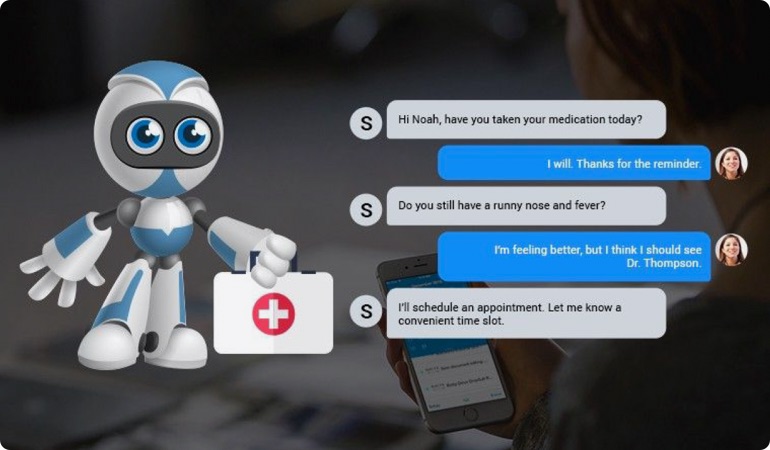
Smart Virtual Assistants (aka chatbots) can revolutionize how care providers engage with patients. These healthcare chatbots can provide current and accurate information. Hospitals can create a simpler, friendlier, and more personalized ecosystem for their patients with AI-powered chatbots. They can supplement treatment with personalized interaction. While healthcare chatbots can never replace doctors, they can definitely make their work easier, faster, and more efficient. Microsoft research says AI can be at work for your patients.

healthcare chatbots
healthcare chatbots

How can healthcare chatbots ease the burden on healthcare providers and improve patient care?

Healthcare chatbots can add value in multiple areas:

  • Real-time healthcare assistance, pre & post care, surgical consent
  • Appointment scheduling and reminders
  • Patient onboarding & engagement
  • Medical equipment support
  • Information on prescription drugs, medication reminders
  • Billing and administration
  • Claims & benefits management, pre-authorization

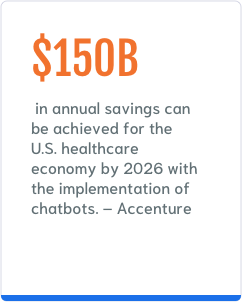
According to Juniper Research, annual cost savings derived from the adoption of chatbots in healthcare will reach $3.6B globally by 2022, up from an estimated $2.8 million in 2017. That’s about $1B growth globally.

Healthcare virtual assistants bring efficiency and empathy to patient care   healthcare chatbot    smart virtual assistant

Healthcare virtual assistants can be deployed on multiple platforms (web, iOS, Android) and integrated into various channels like SMS, email, WhatsApp, and Facebook. Chatbots can adapt the user experience to the capabilities of the channel.

Take WhatsApp, for instance. It is popular across the globe and among various age groups, including the elderly. This would make a WhatsApp chatbot ideal for providing personalized interactions to ensure that elderly patients receive the care they require served through a familiar interface.

One of the first things most patients do when they experience certain symptoms is to turn to Google, which returns a motley and inconsistent set of results and diagnoses.

Healthcare chatbots can provide you with authoritative information from websites that your healthcare provider curates. Once a patient is properly authenticated, they can consider health history, route patients to the appropriate advisors & resources, send appointment reminders, and manage patient records. Healthcare chatbots can deliver lab test results, describe risks, and recommend the next steps. And they can do this with the appropriate privacy controls.

Healthcare chatbot

Challenges faced by the healthcare industry while implementing a healthcare virtual assistant

Despite all the benefits described, the healthcare industry faces a few challenges to the widespread adoption of healthcare chatbots.

  1. User Privacy: Ensure that user (patient) data is protected from unauthorized access both when data is transmitted and when it is stored. Stringent verification measures such as secure login, one-time passwords, and multi-factor authentication must also be put in place. The measures taken to protect user information and privacy should be transparently communicated to patients.
  2. Online Trust: Let’s be honest; most people find it difficult to trust the Internet with their health information. With sites of dubious authority providing unverified & conflicting diagnoses and treatments, patients are bound to be confused and skeptical. Hospitals need to add a personal touch to the bots and customize the interactions to the specific needs of patients.
  3. Workflow Integration: Chatbots are often deployed as point solutions that can respond to user inquiries but do not have the capacity to invoke follow-up. For example, a patient can book an appointment but arrive early to complete the paperwork. To maximize the utility of chatbots, they should be integrated with business workflows that can fulfill patients’ objectives.

Additionally, hyperautomation technologies can further enhance the capabilities of healthcare chatbots. Hyperautomation combines artificial intelligence, machine learning, and robotic process automation to automate manual processes and improve efficiency. By leveraging hyperautomation, healthcare chatbots can handle a wider range of tasks, such as automating administrative workflows, processing billing and claims, and managing patient records.

Moreover, hyperautomation for healthcare can enable seamless integration between healthcare chatbots and existing business systems and workflows. This integration ensures that chatbots can invoke follow-up actions and fulfill patients’ objectives more effectively. For example, a chatbot can schedule an appointment and automatically update the relevant medical records, reducing the burden on healthcare providers and improving the overall patient experience.

Furthermore, hyperautomation can enhance user privacy and security in healthcare chatbot interactions. With robust encryption protocols, secure authentication measures, and strict access controls, hyperautomation technologies can safeguard patient data and ensure compliance with privacy regulations. In summary, integrating hyperautomation into healthcare chatbots holds immense potential for humanizing patient care. By automating manual processes, improving workflow integration, and ensuring data privacy, hyperautomation can augment the capabilities of healthcare virtual assistants, making them more efficient, reliable, and patient-centric. This convergence of technologies can help healthcare providers deliver personalized and seamless experiences while reducing administrative burdens and improving overall patient satisfaction.

In conclusion, a healthcare chatbot can assist doctors, provide health coaching, or guide elderly patients; The opportunities & benefits are endless. Many of the challenges are surmountable with the right technology platform, leading to a personalized, patient-centric experience. In a fast-paced world where everyone is always short on time, AI-powered chatbots like A8Chat are a promising solution to connect hospitals with their patients and offer humanized care. Contact Autonom8 to schedule a demo.