Workflow Automation with Gen AI in Education

Introduction

Artificial intelligence is rapidly evolving, and you might have heard about “Generative Artificial Intelligence” or Gen AI. Forrester defines generative AI as: 

“A set of technologies and techniques that leverage massive corpora of data, including large language models, to generate new content (e.g., text, video, images, audio, code). Inputs may be natural language prompts or other non-code and nontraditional inputs.”

Simply put, however, Gen AI refers to AI systems that create human-like content, like text, images, music, etc. These systems mimic human creativity and generate original content based on patterns and data they’ve learned.

If you’ve been following tech news, you’ve probably seen the amazing things Gen AI can do, like ChatGPT creating new texts, DALL-E2 making imaginative visuals, AudioLM producing unique audio, and GitHub Copilot suggesting new code.

Across all industries, AI truly is reshaping every aspect of our lives, from customer service to how we choose our clothes, and this handy piece of tech has also found use in the field of education. In the following paragraphs, we’ll dive into the use cases of Gen AI in education about more effective lesson plans and administrative tasks, too.

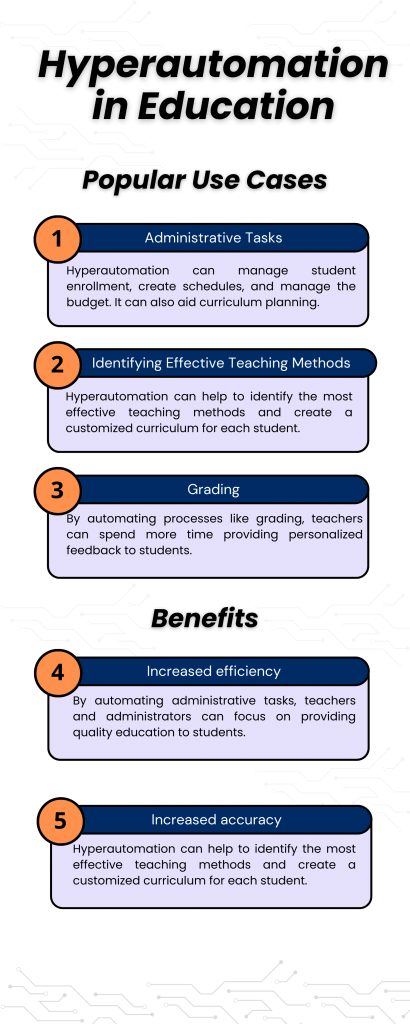
Related article: Hyperautomation in Education: Use Cases, Benefits, and Solutions

Growing importance of Gen AI in modern education

The integration of technology in the classroom goes beyond just a trend; it’s a fundamental shift in the way we learn and teach. The advent of digital tools, online resources, and the ever-expanding world of educational software has transformed traditional classrooms into dynamic, interconnected learning environments. As technology continues to advance, its impact on education is multifaceted. It not only offers more engaging and interactive learning experiences but also equips students with essential digital skills for the modern workforce. Moreover, it enables educators to track student progress better, personalize instruction, and manage administrative tasks more efficiently.

The Use Cases of Gen AI in Education

Effective Lesson Plans

Personalized lesson plans are a powerful tool in ensuring students receive tailored education, increasing engagement, and facilitating their maximum potential. These customized curricula are created using AI-powered algorithms that analyze various student data points, including their past academic performance, skills, and feedback they may have provided about the content. This level of personalization is particularly valuable for students with learning disabilities or disorders.

Course Design

Generative AI tools are pivotal in designing and organizing course materials, encompassing syllabi, lesson plans, and assessments. Their ability to personalize course content based on students’ individual knowledge gaps, skills, and learning styles is a game-changer, offering tailored resources like practice problems and interactive exercises.

Moreover, Generative AI can be integrated with other cutting-edge technologies, such as virtual reality, to create simulations and environments that significantly enhance the educational experience. These interactive courses increase engagement and immersion, ultimately improving the way students learn.  A generative AI system could, for example, construct a virtual laboratory setting where students can conduct experiments, observe outcomes, and make predictions based on their observations. This type of innovation not only facilitates hands-on learning but also transcends physical limitations, allowing students to explore, experiment, and learn in ways that were previously unimaginable. Generative AI is redefining the boundaries of education, fostering creativity and interactive learning

Content Creation for Courses 

Generative AI can be a real game-changer when it comes to making course materials. It can help teachers create many things like quiz questions, exercises, and easy-to-understand explanations. This is super handy, especially for teachers who need a lot of different materials for their classes. AI can even take existing content and give it a fresh twist. Further to this, it can also be leveraged to generate extra material to improve courses, like reading lists, study guides, discussion questions, flashcards, and summaries. It can even write scripts for video lessons or podcasts, making it easier to create fun online learning materials. And if you need specific pictures or images for your lessons, AI can whip those up, too, so your teaching materials are spot on.

Administrative ease

From an administrative point of view, it empowers teachers and educational institutions to streamline administrative responsibilities, freeing up extra time for teaching and learning. For example, it can care for grading, lighten the load on educators, and ensure students receive prompt feedback. Another significant advantage is personalized learning, as Gen AI can adjust the curriculum to each student’s unique requirements and speed, creating a more individualized educational journey. Furthermore, it supports in-depth data analysis, enabling educational organizations to make well-informed choices regarding curriculum enhancements and the tracking of student performance.

Related article: 5 ways AI-chatbots can redefine the classroom experience 

The Advantages of Gen AI Workflow Automation in Education

Streamlined Administrative Tasks

Gen AI Workflow Automation streamlines the labor-intensive administrative tasks within educational institutions. Time-consuming processes like enrollment management, attendance tracking, and resource allocation can be efficiently managed through automation.

Beneficial Applications

Automation’s benefits extend to various areas, from simplifying registration and scheduling to optimizing resource allocation, resulting in more effective resource utilization. It can even ensure better financial management by automating budgeting and expense tracking.

Data-Driven Decision Making

Data analysis is a significant advantage of Gen AI Workflow Automation in education. It empowers educators and institutions to harness the power of data for informed decision-making. By analyzing student performance data, institutions can identify areas for improvement and address them effectively.

Related article: A Practical Guide to Implementing Hyperautomation Into Your Enterprise

Future Implications Of Generative AI In Education

Education is rapidly evolving, and generative AI will likely play a major role in shaping its future. We can anticipate seeing cutting-edge generative AI applications in education as the technology develops. For instance, generative AI could be used to create virtual teachers that would provide students with 24/7 support, allowing them to learn at their own pace and on their own schedule. This could be particularly beneficial for students in remote or underserved areas who may not have access to traditional classroom-based education.

Generative AI could also be used to create adaptive learning experiences that would adjust in real-time to student’s needs and abilities. This could be done by using generative AI systems to analyze students’ learning patterns and preferences and then adapting the content and teaching methods accordingly. This would allow students to receive more targeted and effective support and achieve better learning outcomes.

On the whole, generative AI has the potential to complement educators and the EdTech sector in many creative and time-saving ways, revolutionizing the traditional classroom setting. Reach out to Autonom8 today and simplify your workflows. Ask for a free demo today!
The Impact of Gen AI on the Future of BPO

Introduction

As you may already be aware, BPO, or Business Process Outsourcing, is a simple way for businesses to delegate specific tasks or processes to specialized service providers. These tasks range from customer support and data entry to back-office operations like accounting or human resources. BPO helps companies focus on their core functions while experts handle the outsourced processes. It’s all about enhancing customer service and making BPO operations smoother and more efficient. However, the BPO landscape is on the brink of transformation, and at the heart of this change is Generative Artificial Intelligence, or Gen AI. 

What is Gen AI, though? Well, Forrester defines generative AI as: 

“A set of technologies and techniques that leverage massive corpuses of data, including large language models, to generate new content (e.g., text, video, images, audio, code). Inputs may be natural language prompts or other non-code and nontraditional inputs.” 

In this article, we will delve into the impact Gen AI is poised to have on BPO services, from enhancing customer interactions to reimagining operational processes.

Related article: Streamline ITSM with Intelligent Virtual Assistants

Use Cases of Gen AI in Customer Service/BPO

The advent of Gen AI promises to revolutionize how companies engage with their clientele. Let’s look at the transformative applications for Gen AI that can reshape how businesses operate and serve their customers.

Reducing Customer Efforts with Gen AI

Companies constantly strive to provide seamless and hassle-free experiences, and “customer is king” is truer than ever. Gen AI is pivotal in simplifying and automating various customer-facing processes.

Gen AI-powered chatbots and virtual assistants are prime examples. These intelligent systems can handle customer inquiries, from basic FAQs to complex problem-solving. They operate round-the-clock, ensuring customers can get the help they need at any hour. This reduces response times and minimizes customer effort, as they can find answers or resolve issues quickly and effortlessly.

Moreover, Gen AI excels in delivering personalized and contextual interactions. Analyzing customer data and behaviors can tailor responses and recommendations, making customers feel understood and valued. The ability to escalate to a human agent seamlessly ensures that complex or sensitive matters receive the attention they deserve. 

Reducing Agent Effort and Boosting Productivity with Gen AI

While Gen AI simplifies the customer’s journey, it also works effectively to alleviate the workload of human agents within the BPO ecosystem. AI-powered tools and analytics enable agents to access relevant information rapidly, helping them address issues more efficiently.

For instance, Gen AI’s ability to provide GPT-powered search and response means that agents can quickly find answers to customer inquiries, reducing research time and streamlining their interactions. Integrating rules-based dialog and quality optimization ensures that agents have the guidance and resources to deliver consistent, high-quality service.

Additionally, Gen AI continuously learns and adapts from customer interactions, facilitating ongoing training and development for agents. This enhances their skills and empowers them to tackle more complex challenges effectively.

Enhancing the Enterprise-Wide Customer Experience with Gen AI:

Beyond individual customer interactions, Gen AI has the potential to elevate the entire enterprise-wide customer experience. Harnessing data from various touchpoints can provide valuable insights into customer preferences, pain points, and trends.

These insights enable businesses to make informed decisions and tailor their products and services to meet customer expectations better. In this way, Gen AI doesn’t just impact customer service; it has a far-reaching influence, transforming the core of business operations.

Related article: The Complete Overview of Customer Journey Automation

Autonom8’s Generative Low Code Platform as a Service

Autonom8 recognizes the value that Gen AI could have on workflows, which is why our Generative Low Code Platform as a Service is revolutionizing BPO. Here are a few of the key features of our suite of products!

Generative Stack

At the core of Autonom8’s offering is the Generative Stack, a foundational framework that powers a range of advanced capabilities.

Real-time Intelligence

Autonom8 harnesses real-time intelligence, enabling rapid data-driven decision-making to enhance operational efficiency and customer service.

User Orchestration

The platform includes user orchestration features that intelligently allocate tasks and resources, optimizing workflow management.

Low Code Suites

Autonom8 empowers users to easily create customized applications and workflows through its low code suites, reducing the need for extensive coding skills.

Workflow Automation

Emphasizing workflow automation, Autonom8 streamlines processes, reducing manual effort, errors, and response times.

Omni-channel

Autonom8 offers omni-channel capabilities, ensuring a unified customer experience across various communication channels, including chat, email, and social media.

100% Cloud Native

Autonom8’s 100% cloud-native architecture provides scalability, flexibility, and hassle-free deployment, allowing businesses to adapt quickly to changing demands.

Workflow Automation Modules

Provide an overview of Autonom8’s suite of workflow automation modules, including A8Chat, A8Flow, A8Solo, A8Studio, A8Live, and A8IQ.

Highlight how each module contributes to BPO efficiency and customer service.

Security Considerations and the Autonom8 Approach

With these advancements, we understand the importance of having a multi-faceted approach to data security, prioritizing protecting sensitive information in the BPO landscape. This commitment is evident through:

  • End-to-End Encryption: Data is safeguarded throughout its journey, whether in transit or at rest, ensuring it remains inaccessible to unauthorized parties.
  • PII Protection: Autonom8 employs text redaction, differential privacy, and holomorphic encryption to secure Personally Identifiable Information (PII) from exposure.
  • Future Development: Autonom8 is actively working on voice (streaming) redaction to protect audio data and exploring the integration of authoritative data sources for enhanced data accuracy and trustworthiness.

Autonom8’s comprehensive and forward-looking security measures provide peace of mind for businesses in the BPO sector, ensuring their data remains confidential and secure.

The Future of Gen AI in BPO

Gen AI’s future in BPO holds immense potential, and its evolution is poised to reshape the very foundations of this sector. Some aspects and features that Gen AI might perfect soon –

Gen AI’s Role in Voice Interactions:

Voice interactions once considered a futuristic concept, are swiftly becoming an integral part of customer service in BPO. Gen AI is at the forefront of this evolution.

Gen AI and Data Integration:

In the BPO landscape, where data is the lifeblood of operations, Gen AI is set to redefine data integration. Its capacity to rapidly process and comprehend vast datasets streamlines the integration of data from diverse sources and platforms. 

Conclusion

The company’s forward-thinking approach extends to enhancing voice interactions. Autonom8 continually refines and expands its voice capabilities, ensuring clients benefit from the latest advancements in this field. 

Reach out to Autonom8 today and simplify your workflows. Ask for a free demo today!
FAQs on Gen AI for BPO

What is Gen AI and how does it affect the BPO industry?

Gen AI refers to the integration of artificial intelligence (AI) with human intelligence, revolutionizing various industries, including BPO. In the BPO sector, Gen AI enhances efficiency, automates repetitive tasks, and provides advanced data analytics, leading to improved services and customer satisfaction.

How are BPO companies leveraging Gen AI technologies?

BPO companies are adopting Gen AI technologies to streamline operations, automate routine tasks, enhance decision-making processes, and offer personalized customer experiences. AI-driven chatbots, machine learning algorithms, and data analytics tools are among the key technologies being used to optimize BPO services.

What benefits does Gen AI bring to businesses outsourcing their processes?

Gen AI in BPO results in increased productivity, reduced operational costs, higher accuracy in tasks, faster response times, and improved customer interactions. Businesses outsourcing their processes can leverage AI-driven solutions to achieve greater efficiency and focus on core activities.

Will Gen AI replace human workers in the BPO industry?

Gen AI is designed to complement human capabilities, not replace them. While AI technologies automate repetitive tasks, human workers continue to play a crucial role in handling complex tasks, providing empathy, creativity, and problem-solving skills that AI cannot replicate. The synergy between AI and human expertise is the key to success in the future of BPO.

How can businesses ensure data security and privacy when using Gen AI in BPO services?

Data security and privacy are paramount concerns in the BPO industry. BPO companies deploying Gen AI technologies adhere to strict security protocols, encryption standards, and compliance regulations such as GDPR (General Data Protection Regulation). They invest in robust cybersecurity measures and employee training to safeguard client data and ensure privacy.

A Practical Guide to Implementing Hyperautomation Into Your Enterprise

Introduction

If you’ve been staying tuned to our blogs or staying abreast of the latest tech developments, you’re likely no stranger to the concept of automation and its transformative potential in enhancing everyday workflows. In fact, studies from 2022 showed that 85% of organizations had already adopted some form of automation to streamline their operations, indicating a widespread recognition of its benefits. Across various industries, hyperautomation has taken center stage as the next evolution of this trend, offering a comprehensive approach that combines various technologies to achieve unprecedented efficiency gains. 

Across various industries, hyperautomation has already proven its efficacy in streamlining repetitive tasks. Our previous articles have elaborated on its advantages to sectors such as education, insurance, healthcare, and banking.

So just how would an enterprise go about implementing hyperautomation to unlock these transformative benefits?

Steps to Implement Hyperautomation 

Assessing existing processes

Identifying automation opportunities

The first crucial step is to analyze your organization’s existing processes comprehensively. Collaborate with various teams to identify tasks and workflows that are repetitive, time-consuming, and prone to errors. These are the prime candidates for automation. Utilize process mapping techniques to visualize the end-to-end workflows, allowing you to pinpoint the areas with the highest potential for improvement.

Evaluating potential benefits

As you identify automation candidates, it’s essential to assess the potential benefits they can bring. Look beyond just efficiency gains; consider factors like improved accuracy, faster processing times, and enhanced customer experiences. Quantify these benefits whenever possible to create a convincing case for the implementation of hyperautomation. Industry benchmarks, and case studies can provide valuable insights into the potential return on investment.

Setting clear objectives

Defining key performance indicators (KPIs)

To measure the success of your hyperautomation initiatives, you need well-defined Key Performance Indicators (KPIs). These should align with the specific goals of each automated process. For instance, KPIs could include metrics like task completion time, error rates, cost savings, and customer satisfaction scores. Clearly outline how these KPIs will be tracked and measured to ensure accountability and continuous improvement.

Aligning automation goals with business goals

Hyperautomation should be a strategic endeavor that aligns with your broader business objectives. Collaborate with key stakeholders, including senior management and department heads, to ensure that the automation goals are in line with the overall vision of the organization. This alignment not only ensures that automation efforts contribute meaningfully to the company’s growth but also garners necessary support and resources from top-level decision-makers.

Selecting the right hyperautomation technology stack

Choosing RPA tools, AI platforms, etc

Choosing RPA tools, AI platforms, etc.: Once you’ve identified the processes to automate, it’s time to select the appropriate technologies that align with your goals. Evaluate different Robotic Process Automation (RPA) tools, Artificial Intelligence (AI) platforms, machine learning frameworks, and other relevant technologies. Consider factors such as ease of use, scalability, flexibility, and vendor support. Customizing your technology stack to the specific needs of each process is essential for optimal results.

Ensuring compatibility and integration

As you adopt various technologies, ensure that they can seamlessly integrate with your existing systems. Compatibility with your organization’s IT infrastructure is critical to avoid disruptions and bottlenecks. Integration capabilities should cover both data flows and process interactions. This might involve APIs, middleware, or custom connectors to enable smooth communication between different tools and platforms.

Designing and testing automated workflows

Mapping out end-to-end processes

With the technology selected, it’s time to design the automated workflows. Create detailed process maps that outline the steps, decision points, inputs, outputs, and interactions between various tools or systems. This map serves as the blueprint for your automation efforts and provides a visual representation of how tasks will be executed. It’s also a valuable reference point for troubleshooting and optimization.

Running pilot tests and simulations

Before full-scale implementation, run pilot tests of your automated workflows to identify any potential bottlenecks, errors, or inefficiencies. These tests allow you to iron out any issues and make necessary adjustments before deployment. Simulations can help you predict how the automation will behave under different scenarios, ensuring robustness and reliability when it’s fully integrated into your operations.

Monitoring and continuous improvement

Real-time tracking of automation performance

After implementation, continuously monitor the performance of your automated processes in real-time. Use dashboards, analytics tools, and alerts to track key metrics and identify any deviations from expected outcomes. Real-time monitoring allows you to address issues and maintain the desired level of efficiency promptly.

Iterative optimization based on insights

Armed with performance data, continuously iterate and optimize your automated workflows. Use insights gathered from monitoring to fine-tune processes, enhance accuracy, and further reduce processing times. Regularly review your chosen KPIs to assess the impact of automation on your organization’s objectives. This iterative approach ensures that your hyperautomation efforts evolve in sync with changing business needs and technological advancements.

Related Article: Hyperautomation in the Banking Sector: Use Cases, Benefits, and Solutions

Future Trends in Hyperautomation

Evolution of hyperautomation technologies

The journey of hyperautomation is far from static. As technology continues to advance, we can anticipate even more sophisticated tools and frameworks. Machine learning algorithms will become smarter, enabling better decision-making within automated processes. Natural language processing (NLP) and computer vision will enhance the ability to handle unstructured data and complex tasks. The fusion of hyperautomation with edge computing and the Internet of Things (IoT) will extend automation capabilities to a new realm of real-time, decentralized operations.

Anticipated impact on industries and job roles

Hyperautomation is poised to reshape industries and job roles in profound ways. Repetitive and rule-based tasks will increasingly be handled by machines, freeing up human resources to focus on higher-value, creative, and strategic activities. Industries such as manufacturing, logistics, and customer service are likely to experience significant shifts in their operational landscape. This transformation will necessitate reskilling and upskilling efforts to equip the workforce with the digital and analytical skills required to collaborate harmoniously with automated systems.

Conclusion

Hyperautomation reduces costs and increases agility. Having trouble identifying which workflows could benefit from hyperautomation? Reach out to Autonom8 today and simplify your workflows. Ask for a free demo today.

FAQs Hyperautomation

Where do I start with implementing hyperautomation?

Begin by assessing your existing processes to identify tasks that can be automated. Look for repetitive and rule-based activities that could benefit from technology.

How do I choose the right automation tools for my enterprise?

Research and select tools that align with your needs. Consider factors like ease of use, scalability, and compatibility with your current systems.

What's the importance of clear objectives in hyperautomation?

Clear objectives ensure that your automation efforts have purpose. Define key performance indicators (KPIs) and make sure they tie into your business goals.

How can I ensure the automated workflows are effective?

After mapping out the processes, run pilot tests with real or simulated data. This helps identify any issues and refine the workflows before full implementation.

Is hyperautomation a one-time setup, or does it require ongoing attention?

Hyperautomation is an ongoing process. Continuous monitoring of automated processes is crucial, allowing you to make improvements, optimize performance, and adapt to changing business needs.

How Hyperautomation Reduces Costs and Increases Agility

Understanding Hyperautomation

Gartner defines hyperautomation as “the orchestrated use of multiple technologies, tools or platforms, including artificial intelligence (AI), machine learning, event-driven software architecture, robotic process automation (RPA), business process management (BPM) and intelligent business process management suites (iBPMS), integration platform as a service (iPaaS), low-code/no-code tools, packaged software, and other types of decision, process, and task automation tools.” This comprehensive definition encapsulates the vast landscape of technologies that together constitute hyperautomation. It’s not just about automating tasks; it’s about orchestrating a symphony of innovations to elevate business operations to unprecedented levels of efficiency and adaptability.

In today’s competitive landscape, organizations are driven to seek out every possible avenue for optimization. Hyperautomation has emerged as a business-driven, disciplined approach that empowers organizations to rapidly identify, evaluate, and automate a multitude of both business and IT processes. It’s a strategic imperative that harnesses the capabilities of AI, machine learning, RPA, BPM, and more to pave the way for a new era of operational excellence.

However, hyperautomation is far more than the sum of its parts. It goes beyond usual automation by combining various advanced technologies. It’s the merging of AI’s thinking abilities, machine learning’s continuous learning, RPA’s rule-driven automation, and BPM’s process improvement. This combination creates teamwork that speeds up tasks and adds smartness and flexibility to them.

For a more comprehensive understanding of hyperautomation, do browse our existing content, where we discuss its use cases in the banking, insurance, healthcare, and even education sectors. 

So with that said, join us as we dive into how hyperautomation redefines automation and propels businesses forward by reducing costs and increasing agility.

Related article: A Practical Guide to Implementing Hyperautomation Into Your Enterprise

The Impact on Cost Reduction

Numerous studies have shown us that companies often find themselves weighed down by the accumulation of organizational costs, spanning data storage, security measures, and workforce expenses. Aligning a mix of technologies to support these operations is quite challenging, and consolidating these different components feels hard to achieve. A practical way to handle this growing organizational debt is by automating and coordinating tasks across different parts of the company. Intelligent automation, which uses a mix of technologies and digital workers, becomes a powerful solution. These elements work together to speed up processes and boost revenue, helping companies bring down their debt to a more manageable level. This leads to better cost-efficiency and long-term growth. We’ll go into the specifics below.

Efficiency and Productivity

Hyperautomation uses advanced tech to simplify complex tasks, learn, and speed up processes. This saves resources, cuts costs, and boosts efficiency. Consider a healthcare context: by automating tasks such as data entry and retrieval, hyperautomation minimizes the resources dedicated to these processes, leading to cost reduction. This efficiency boost allows healthcare providers to allocate more time and resources to patient care.

Minimized Errors and Rework

Hyperautomation, through its fusion of AI and machine learning, leads to a substantial decrease in human errors within processes. This collaboration of technologies ensures heightened accuracy, sidestepping the financial implications of mistakes. Real-world instances underscore how this error reduction bolsters operational efficiency and eliminates the necessity for costly rework and corrections, resulting in significant cost savings.

An example from the automotive sector – By implementing hyperautomation, AI-powered cameras and sensors can monitor assembly processes in real time. These technologies can detect even the smallest deviations from the required specifications, such as incorrect torque values or misaligned components. When such deviations are identified, the system can immediately halt the production line, preventing the production of flawed vehicles. The result? A significant reduction in errors and defects leads to higher-quality vehicles and fewer recalls. Not only does this enhance the brand’s reputation for reliability, but it also saves substantial costs that would otherwise be spent on rework, repairs, and potential legal liabilities associated with defective vehicles. 

Also read: Hyperautomation’s Role in Insurance: Importance, Benefits, and Use Cases

The Enhancement of Agility

Faster Decision-Making

Making well-informed decisions can mean the difference between success and missed opportunities. Hyperautomation equips businesses with real-time data insights, providing decision-makers with a comprehensive and current understanding of their operations. By effortlessly aggregating and analyzing data from various sources, hyperautomation accelerates the decision-making process. This newfound agility in decision-making enables organizations to seize opportunities promptly, respond to market changes effectively, and stay ahead of the competition.

Rapid Process Adaptation

Adaptability is a hallmark of resilient organizations. Hyperautomation empowers businesses to adapt processes to changing conditions swiftly, ensuring they remain effective and aligned with strategic goals. With the ability to seamlessly reconfigure workflows and incorporate feedback-driven improvements, hyperautomation guarantees that processes evolve in lockstep with the dynamic business landscape. Whether it’s responding to shifting customer demands or integrating new market trends, hyperautomation provides the necessary agility to stay relevant and thrive in a fast-paced world.

Improved Customer Experience

Customer expectations continue to evolve, demanding personalized experiences and swift responsiveness. Hyperautomation plays a pivotal role in meeting these demands by enhancing the customer experience across touchpoints. Through AI-driven chatbots, predictive analytics, and dynamic process adjustments, hyperautomation enables businesses to offer tailored solutions and proactive assistance. This translates to quicker query resolutions, personalized recommendations, and seamless interactions, all of which elevate customer satisfaction and foster lasting loyalty!

Also read: Hyperautomation in Healthcare: Use Cases, Benefits, and Solutions

Implementing Hyperautomation Strategically

As organizations recognize the transformative potential of hyperautomation, it becomes key to implement it to unlock the full benefits effectively.

Identifying Processes for Hyperautomation

The first step in harnessing hyperautomation’s power is identifying the right processes to automate. Not all processes are created equal, and selecting the ones that offer the highest return on investment is crucial. Complex, repetitive, and rule-based tasks often stand out as prime candidates for hyperautomation. By conducting a comprehensive assessment, businesses can prioritize processes that are resource-intensive and prone to errors. This strategic approach ensures that the integration of hyperautomation yields maximum efficiency gains and cost savings.

Developing a Hyperautomation Roadmap

Implementing hyperautomation isn’t a one-size-fits-all endeavor; it requires a structured approach. Developing a hyperautomation roadmap involves crafting a step-by-step plan that outlines the processes to be automated, the technologies to be deployed, and the expected timeline. This roadmap acts as a guiding compass, ensuring that hyperautomation initiatives align with overarching business goals. Moreover, it enables organizations to start small with pilot projects, learn from these experiences, and gradually scale up. By incorporating feedback loops and constant evaluation, businesses can fine-tune their hyperautomation strategy for optimal outcomes. 

Having trouble identifying which workflows could benefit from hyperautomation? Reach out to Autonom8 today and simplify your workflows. Ask for a free demo today.

Also read: Hyperautomation in Banking Sector: Use Cases, Benefits, and Solutions

FAQs on how hyperautomation reduces costs

What exactly is hyperautomation, and how does it differ from traditional automation?

Hyperautomation is an advanced form of automation that combines various technologies like AI, machine learning, and RPA. Unlike traditional automation, which focuses on specific tasks, hyperautomation integrates multiple technologies to transform entire processes, making them smarter and more adaptable.

How does hyperautomation contribute to cost reduction?

Hyperautomation reduces costs by streamlining tasks, minimizing errors, and optimizing resource allocation. This leads to increased efficiency, decreased labor expenses, and reduced rework or rectification costs, resulting in overall savings for businesses.

What are some real-world examples of organizations that have benefited from hyperautomation's agility?

Organizations like banks, insurance companies, and healthcare providers have leveraged hyperautomation for agility. Banks use it for faster customer onboarding, insurers for quicker claims processing, and healthcare providers for efficient patient record management. These examples showcase how hyperautomation enhances agility in different sectors.

What are the challenges organizations might face when adopting hyperautomation?

Integration complexity, workforce reskilling, and security concerns are common challenges. Integrating various technologies, ensuring employees are skilled to work with automation, and maintaining data security can pose hurdles during adoption.

How can businesses strategically implement hyperautomation to maximize benefits?

To maximize benefits, businesses should start by identifying processes suitable for hyperautomation based on complexity and potential ROI. Developing a clear roadmap, beginning with pilot projects, and measuring success using key performance indicators (KPIs) are essential steps. Regularly evaluating and adjusting the strategy ensures optimal results.

An Overview of the Low-Code Market in 2023

Introduction

Sources predict that the global low-code development platform market is predicted to generate a revenue of $187.0 billion by 2030. The question arises: how can this exponential growth be possible for a fairly recent piece of technology? Well, the answer lies in the extensive advantages that low-code platforms provide to businesses of all sizes. However, before delving into these benefits and examining the state of low-code platforms in 2023, it is essential to provide a brief background on their emergence and evolution.

With the emergence of rapid application development (RAD) platforms in the early 2000s came a paradigm shift in the world of software development. These platforms introduced a more visual and user-friendly approach to application development, enabling users to create applications rapidly and efficiently without extensive coding knowledge. They could use a drag-and-drop interface to achieve what they needed!

As a result, businesses and organizations of all sizes began to embrace low-code technology for its ability to streamline the development process and reduce costs. This widespread adoption has had a profound impact on the way companies approach software development, making it a transformative force in the industry.

By the mid-2010s, the adoption of low-code technology had gained significant momentum, leading it to become a mainstream approach in the world of software development. Organizations of all sizes recognized its potential to expedite the application development process and achieve cost savings, leading to widespread acceptance across various industries.

As we progress through the year 2023, the low-code market continues to thrive and undergo significant evolution! This technology has not only maintained its popularity but has also experienced substantial growth, driven by the escalating demand for swift digital transformation and agile software development practices. Let’s have a look at the Low Code Market in 2023.

Related article: A Practical Guide to Implementing Hyperautomation Into Your Enterprise

Key Factors Driving Low Code Development in 2023

The adoption of low-code technology has witnessed a remarkable surge across enterprises and industries in recent times. Businesses spanning various sectors have recognized the potential of low-code platforms to streamline their application development processes and drive digital innovation. Aside from its increased adoption across industries, here are a few more key factors propelling low code development forward–

Advancements in Low-Code Technologies

Low-code platforms have undergone significant advancements, offering more robust features, integrations with emerging technologies like artificial intelligence and machine learning, and improved scalability. These advancements have made low-code solutions capable of addressing complex use cases and scaling to meet enterprise-level demands.

Integration with Emerging Technologies

Low-code platforms have embraced the integration of emerging technologies to augment application capabilities. By incorporating artificial intelligence, the Internet of Things (IoT), and blockchain functionalities, low-code solutions can deliver smarter and more innovative applications to meet evolving customer expectations.

Growing Developer Community

The low-code movement has led to the emergence of a vibrant developer community, where enthusiasts and professionals collaborate, share knowledge, and contribute to open-source low-code projects. This community-driven approach fosters innovation and accelerates the evolution of low-code technology.

Benefits and Challenges of Low-Code Development

Flexibility

Understandably, low-code technology is often met with skepticism about its ability to carry out complex functions. However, over time since its advent, this technology has evolved steadily and improved to be able to carry out complex coding requirements. As a bonus, developers have discovered that they can quickly change the look and feel of an application or add new features without having to write large amounts of code. This increased flexibility has led to improved time to market, reduced development costs, and a more agile response to changing business requirements.  

Reduce Dependency on Hiring Specific Resources 

A unique benefit of low-code is its reduced dependency on hiring specific resource personnel! Low-code technology can reduce the dependency on hiring specific resources, such as highly skilled developers, by allowing non-technical users to participate in the application development process. This can lead to a more diverse team of contributors, allowing organizations to tap into a wider talent pool and potentially reduce their dependency on hiring specific technical resources. The drag-and-drop functionalities also make it easier for organizations to quickly and easily develop new applications without relying on a limited pool of specialized developers. 

Better Utilization of Technical Resources

Low-code application development permits development teams and business users to create more applications (of any level of complexity) in less time than traditional coding. Low-code application development platforms enable organizations to become more agile and quickly meet enterprise business requirements such as workflow automation, streamlined business operations, improved customer journeys, and policy and regulation compliance. You could also stop by our post on how to measure and maximize the ROI of low-code for more insight. 

Use Cases of Low-Code Solutions in Different Industries

Low-code solutions have proven to be versatile and practical across various industries, offering tailored solutions to meet their unique needs. In the finance and banking sector, these platforms expedite the development of customer-facing applications, ultimately enhancing operational efficiency and customer experiences. The healthcare and life sciences industry benefits from low-code by creating robust patient management systems, electronic health records (EHRs), and facilitating medical research applications. 

Retail and e-commerce businesses leverage low-code to build responsive e-commerce websites, efficient inventory management systems, and effective customer engagement tools. The manufacturing and supply chain sector utilizes low-code to optimize production processes and enable real-time tracking for better efficiency. Additionally, the government and public sector find value in low-code’s ability to enhance citizen services, streamline administrative processes, and swiftly deliver digital solutions to the public. Across these diverse industries, low-code technology is reshaping how organizations innovate and respond to their unique challenges.

Related article: The Impact of Gen AI on the Future of BPO

Conclusion

Low-code application development is a streamlined approach toward digital transformation across organizations that Autonom8 would be happy to assist you with. If you are still figuring out how to begin your journey, our low-code pros can help! Our expert team will guide you through the entire process, ensuring smooth implementation and empowering your business to flourish in the digital age. Embrace the power of low-code technology now to experience faster innovation, increased agility, and remarkable success in your digital transformation journey. Join us today and unlock the potential of low-code for your business’s growth and prosperity.

Low-code development is a game-changer in the software development landscape, offering a simplified and visual approach to application building. It empowers businesses to accelerate their digital transformation initiatives, enabling faster time-to-market, increased agility, and cost-effective solutions. As we move forward, low-code’s potential to drive innovation, bridge the IT-business gap, and fuel business growth is bound to revolutionize how organizations develop and deploy applications.

FAQs on Low-code market

Who are the key players in the low-code market in 2023?

Leading companies include OutSystems, Autonom8, Mendix, and Microsoft's Power Apps, shaping the low-code landscape.

What are current low-code market trends?

AI integration, mobile app development, and advanced integrations are driving low-code's evolution.

What challenges come with adopting low-code?

Balancing customization, security, and scalability are key considerations when implementing low-code solutions.

What's the future outlook for the low-code market?

The low-code market is expected to continue growing, with more innovations and integrations on the horizon.

Characteristics of High-Performing Low-Code Solutions

Introduction

Gartner estimates that by 2025, 70% of new applications developed by organizations will use low-code or no-code technologies, up from less than 25% in 2020.

In the past, computer programming was mainly done by professional developers using complex textual languages like C, Java, or Python. However, low-code programming now offers an alternative approach. It allows citizen developers to create programs using visual interfaces, demonstrations, or even natural language. As we have discussed in our previous posts about the benefits of low-code platforms, this tool is a cutting-edge approach to application development that uses a drag-and-drop approach to build applications, as opposed to the conventional method of manually and physically writing tedious code. 

Now, given the rapid rate of advancement in today’s myriad methods of software development, there are numerous, and we mean numerous low-code platform vendors. It thus becomes all the more crucial to have a comprehensive understanding of the characteristics of an effective low-code platform that sets it apart from other development tools. 

Sound knowledge of the characteristics could empower businesses to make informed decisions when selecting a development approach! The point of this blog is thus to help businesses familiarize themselves with these characteristics. Following this, these organizations can evaluate the suitability of high-performance low code for their specific needs and objectives, resulting in more successful and efficient development endeavors.

With that, let’s dive into the notable characteristics of the best low-code platform for your business!

Related Article: Advantages and Disadvantages of the Low-Code Platform

Characteristics of High-Performing Low-Code Solutions

They have the ability to handle large-scale applications and workflows efficiently

One of the critical features of effective high-performance, low-code platforms is their remarkable ability to handle large-scale applications and workflows with ease. Unlike traditional development methods that may require extensive coding and time-consuming processes, low code empowers developers to quickly build and deploy applications that can effortlessly scale as per business needs. Scalability is an integral feature that allows businesses to adapt to digital urgencies with more ease quickly.

Low Code Platforms Can Provide for optimizing performance and ensuring smooth operations.

Beyond just scalability, these tools also focus on optimizing performance to ensure smooth operations even in demanding scenarios. These platforms employ various techniques to enhance application performance, such as intelligent caching, code optimization, and efficient data handling. By fine-tuning the underlying architecture, high-performance, low-code platforms enable applications to run seamlessly, delivering optimal performance and responsiveness.

Flexibility and Customization

Low code development’s flexibility and customization capabilities play a pivotal role in meeting diverse business requirements without the need for extensive coding. With low-code platforms, organizations can adapt and tailor solutions to their specific needs with remarkable ease. These platforms offer a range of customization options, allowing developers to personalize applications, workflows, and interfaces to align perfectly with their unique business processes. By harnessing the power of low code flexibility and customization, businesses can rapidly build and deploy tailored solutions that drive efficiency, productivity, and innovation within their operations.

Security and Compliance

Security and compliance are critical aspects of low code development. With robust security measures in place, sensitive data and privacy are effectively protected. High-performance low-code platforms employ advanced security protocols, encryption techniques, and access controls to safeguard valuable information from unauthorized access or breaches. Additionally, these platforms adhere to industry regulations and standards to ensure compliance with legal requirements. By prioritizing security and compliance, organizations can confidently develop applications using high-performance low code, knowing that their data is secure and their operations meet the necessary legal obligations. This commitment to security and compliance enhances trust, mitigates risks, and instills confidence in both customers and stakeholders.

Collaboration and Teamwork

Collaboration and teamwork are key components of effective low-code development, facilitating streamlined workflows and enhancing overall productivity. The ideal low-code platforms offer robust collaboration features that enable developers, designers, and stakeholders to work together seamlessly. These platforms provide tools for real-time collaboration, allowing team members to collaborate on the same project simultaneously, share feedback, and make collective decisions. Keep an eye out for these platforms to also have integration capabilities, enabling seamless integration with other tools and systems used in the development process. This integration promotes efficient communication, data sharing, and workflow automation, eliminating silos and fostering a cohesive development environment. By leveraging the collaboration and teamwork features of low code, organizations can optimize their development processes, foster innovation, and deliver quality applications in a collaborative and efficient manner.

User Experience and Accessibility

User experience (UX) and accessibility are integral aspects of high-performance low code development, aiming to create intuitive interfaces and cater to diverse user groups. A good low-code platform prioritizes UX by offering user-friendly interfaces that are visually appealing and easy to navigate. These intuitive interfaces empower users to quickly understand and interact with applications, enhancing productivity and user satisfaction. Additionally, low-code platforms prioritize accessibility by incorporating features that ensure inclusivity for users with diverse abilities. These platforms adhere to accessibility standards, such as providing alternative text for images, keyboard navigation support, and adjustable font sizes, among others. By focusing on user experience and accessibility, high-performance low code development enables organizations to deliver applications that are both functional and user-centric, promoting a positive user experience for all and fostering inclusivity in the digital landscape.

Related article: Low-Code Automation | What it is & Why You Need it

Autonom8 & Low Code

Where do you find these top features? Look no further than Autonom8. Autonom8 is an excellent starting point for low-code/no-code investigation. We have low-code solutions to streamline and automate processes. In addition, our pricing structure makes it one of the most affordable options!

With our visual low-code flow builder, clients can easily create automated workflows in a matter of minutes, eliminating the need for complex manual coding. Additionally, our AI chatbot platform enables businesses to engage their customers effectively, providing seamless and interactive communication. Moreover, Autonom8 helps clients unlock the intelligence within their workflows, leveraging cutting-edge technologies to drive efficiency and optimize processes. Lastly, clients can rely on our dedicated team for support and guidance throughout their development journey, ensuring a smooth and successful implementation. Schedule a demo with Autonom8 today!

Related Article: 7 Key Benefits of Low-code Platforms for Enterprises

Concluding thoughts…

Emerging technologies are playing a transformative role in shaping the future of low code. Advancements such as artificial intelligence, machine learning, and automation are being integrated into low-code platforms, offering intelligent features that enhance development speed and accuracy. As these technologies continue to evolve, we can expect low code development to become even more efficient and capable, further revolutionizing the way businesses build and deploy applications.

Looking ahead, the evolution of low-code development is predicted to have a significant impact on businesses. It is anticipated that low-code platforms will become more robust, enabling the creation of complex applications that traditionally required extensive custom coding. This democratization of software development will empower citizen developers and non-technical users to actively contribute to the development process, fostering innovation and agility within organizations.

Leveraging efficient low-code solutions enables organizations to drive innovation, enhance efficiency, and meet their software development needs effectively. Therefore, it is crucial for businesses to explore and embrace the benefits of low code, capitalizing on its potential for transformative growth in their software development processes. By doing so, they can position themselves at the forefront of technological advancement and gain a competitive edge in the ever-evolving digital landscape.

Related Article: An Overview of the Low-Code Market in 2023

FAQs on Low-Code Solution Characteristics

What’s an example of low-code technology?

Low code technology has various use cases across various industries and business functions. Some common use cases include:
Custom applications: Low-code technology is often used to build custom applications that meet specific business requirements, such as workflow automation, customer relationship management (CRM), and human resource management (HRM) systems.
Rapid prototyping: Low-code technology allows organizations to prototype new ideas and applications quickly, allowing them to test and iterate on new solutions rapidly.

What are low-code tools used for?

Low-code tools are used to accelerate the application development process by providing a visual interface and pre-built components that streamline development tasks. These tools enable users to rapidly create, customize, and deploy applications, reducing the need for manual coding and increasing development speed. Low-code tools are commonly used to build various types of applications, such as business process management systems, customer relationship management software, and mobile applications.

Is low code the future?

Low-code technology is widely seen as a promising and growing trend in the software development industry. It has already proven to be a valuable tool for organizations looking to improve their application development processes and respond more quickly to changing business requirements!

Hyperautomation’s Role in Insurance: Importance, Benefits, and Use Cases

A Day in the Life of an Insurance Worker…

On average, an insurance employee may receive more than 55 new claim submissions daily. They must transfer each new claim form to a shared queue folder in the order they are received and subsequently enter the policyholder’s personal information, such as date of birth, address, social security number, and account number. These details are verified against the company’s claim processing system, following which they are forwarded to the payment processing department.

The insurance industry workforce is engaged in similar repetitive activities for a significant portion of their workday, which includes updating existing policies, reviewing documents for completeness, transmitting claims for payment, and other similar tasks. These activities are mundane, time-consuming, and have a high probability of errors, resulting in bottlenecks as the queue of pending claims only grows longer…

Performing these repetitive tasks is tedious for employees and can be frustrating for customers waiting for claims to be processed. With the increasing demand for faster and more efficient services, the insurance industry is pressured to find ways to automate these mundane tasks and streamline operations. This is where hyperautomation comes in.

Also read: How to Measure & Maximize ROI of Low-code

Importance of Automation in the Insurance Industry

Automation has been an essential tool for the insurance industry for many years, helping to improve operational efficiency, increase productivity, and reduce costs. With the rise of hyperautomation, insurance companies can take automation to the next level and realize even more significant benefits! 

One of the significant advantages of hyperautomation in the insurance industry is its ability to speed up the claims process. With the help of AI and ML algorithms, insurers can quickly review claims and determine their validity, making the entire process much faster and more efficient. Hyperautomation can also eliminate the need for human intervention in certain parts of the claims process, such as data entry, which can significantly reduce the risk of errors.

In the following paragraphs, we will explore the role of hyperautomation in the insurance industry, including its benefits, challenges, best practices for implementation, and future opportunities.

The Role of Hyperautomation in Insurance

Hyperautomation has opened up new opportunities in every sphere of life and business. For the uninitiated, hyperautomation uses advanced technologies such as AI, ML, RPA, and NLP to automate complex business processes. 

Hyperautomation differs from traditional automation in its ability to handle complex and cognitive tasks that were previously only possible for humans. By combining different technologies, hyperautomation can automate end-to-end processes, reduce manual interventions, and enable seamless communication between other systems.

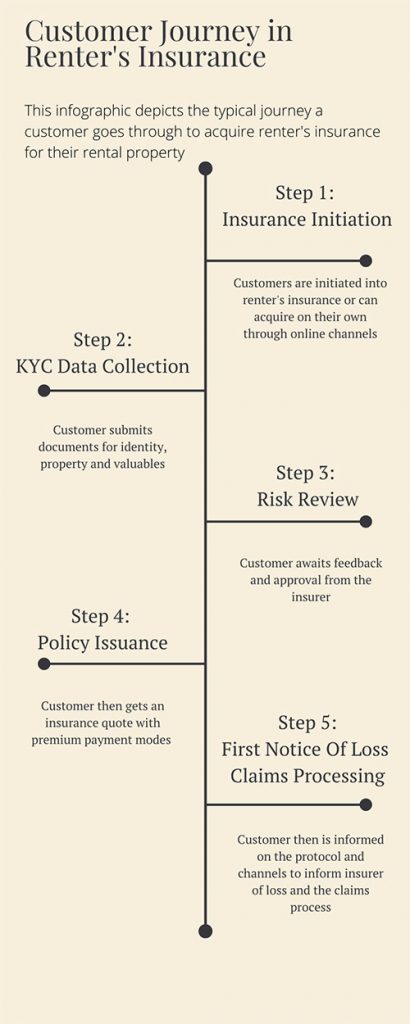
Customer journey in insurance

The benefits of hyperautomation for insurance companies

Noted studies from PwC suggest that insurers can free up employees to focus on more complex tasks, improve customer experience, and increase efficiency by automating processes. This can lead to cost savings of up to 30%. This tech can effectively offer the following benefits – 

Increased efficiency

Hyperautomation can streamline processes, reduce cycle times, and eliminate manual errors, increasing operational efficiency.

Improved customer experience

By automating processes such as claims processing and underwriting processes, insurance companies can improve the customer experience by reducing wait times, providing faster payouts, and offering more personalized services.

Better risk management

Hyperautomation can help insurance companies identify and mitigate risks more effectively by analyzing vast amounts of real-time data.

Cost savings 

By reducing manual interventions, hyperautomation can help insurance companies save costs associated with labor and operational expenses.

Also read: How to Advance Your Digital Customer Journey Strategy with Low-Code Automation

Use Cases of Hyperautomation in Insurance

Claims processing

Hyperautomation can help insurance companies automate the entire claims process, from intake to adjudication, by using AI and ML to assess the validity of claims and process payments.

Underwriting

Hyperautomation can help insurers assess risk and automate underwriting processes by analyzing data from various sources.

Fraud detection

Hyperautomation can help insurers detect fraud by using AI and ML to analyze data and identify patterns that may indicate fraudulent activity.

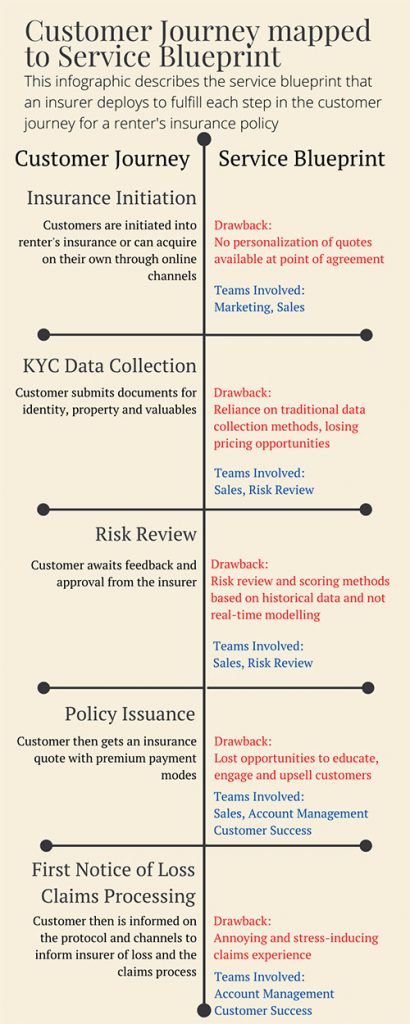
customer journey mapped to service blueprint

Hyperautomation and Autonom8

Have you been losing market share consistently to new insurance and tech players? We’re here to help. 

Schedule a demo with us today to upgrade your customer-facing digital insurance journeys with Autonom8’s enterprise-grade platform and its premium suite of products. With our A8Chat, A8Flow, and A8iQ, our customers are thriving. CJaaS can reimagine your insurance customer journey workflows, blend in data insights from different technology vendors, and enable autonomous learning capabilities into existing insurance journeys. 

Related article: A Practical Guide to Implementing Hyperautomation Into Your Enterprise

A Boon to the Insurance Industry

In many areas within the insurance industry, hyperautomation can be applied, such as customer service, policy management, and risk assessment. As technology evolves, there will be even more excellent opportunities for further automation too!

Hyperautomation has the potential to transform the insurance industry, leading to greater efficiency, improved customer experience, and new business models.

Hyperautomation has the potential to bring significant benefits to the insurance industry, including increased efficiency, improved customer experience, and better risk management. As technology evolves further, hyperautomation will play an increasingly important role in the insurance industry, and insurers must embrace this new technology to stay competitive. Take advantage of the myriad benefits today and reach out to Autonom8 today.

FAQs on Hyperautomation in Insurance

What is Hyperautomation used for?

Hyperautomation is a technology that combines artificial intelligence, machine learning, and robotic process automation to automate a wide range of processes, including administrative tasks, curriculum planning, and learning assessments.

How can hyperautomation technology benefit the insurance sector?

Hyperautomation technology can benefit the insurance sector in several ways, such as improving customer service, streamlining claims processing, reducing operational costs, and increasing efficiency.

What are some use cases of hyperautomation in insurance?

Hyperautomation can be used in the insurance sector for various purposes, including underwriting and risk assessment, policy administration, claims processing, fraud detection, customer service, and compliance.

How can hyperautomation technology reduce costs in the insurance sector?

Hyperautomation technology can reduce costs in the insurance sector by automating repetitive tasks, improving efficiency, reducing errors, and enabling faster claims processing.

How to Use ChatGPT to Enhance Your Customer Experience

Over the past few years, companies worldwide have recognized that customer experience is a top priority for businesses of all sizes across industries. Simply put, they have realized that the ability to provide personalized, efficient, and effective customer support can make all the difference in today’s competitive marketplace. 

Customers and users have more options than ever, and resultantly, their expectations have risen too. They now demand a seamless experience that anticipates their needs and preferences. In essence, a good customer experience has the potential to build customer loyalty and draw in new users through avenues like referrals.

Well, optimizing customer experience is something that Conversational AI–and specifically ChatGPT—can help with. This handy use case is one of the factors behind the steep rise in these tools’ popularity.

Among the myriad Conversational AI models available in the market, ChatGPT has quickly become a popular choice for its ability to understand and respond to natural language queries in a human-like manner. With ChatGPT, businesses can streamline customer support and deliver personalized and efficient customer experiences at scale. Needless to say, it’s making waves in all verticals!

If you still need to learn about the technology, don’t worry – we’re here to fill you in. ChatGPT is a cutting-edge conversational AI language model developed by OpenAI that is changing the game when it comes to customer experience. Allow us to tell you more.

Industry reports estimate $8Bn in annual savings from chatbots, with 80% of businesses considering implementing them.

What exactly is ChatGPT, and how does it work?

ChatGPT is an intelligent generative language model that has risen quickly through the ranks to become the world’s most popular tool today. It uses deep learning to generate human-like responses to natural language inputs.

The model has been trained on vast data, enabling it to understand and respond to various queries. ChatGPT is perhaps one of the most successful applications of Natural Language Processing (NLP) which provides what we can call an ‘interactive dialogue interface’ for users (or businesses, even) to communicate in real time. 

Companies can use ChatGPT for various impressive functions like 

  • creating tailored search engines (CustomGPT), 
  • finding precise information (FactGPT), and 
  • responding to inquiries based on content (QnAGPT).

Much like other aspects of AI, incorporating ChatGPT into customer support channels enables businesses to streamline repetitive tasks. So, whether deployed through chatbots, mobile applications, or websites, ChatGPT empowers companies to offer cost-effective, dependable, and ultra-efficient customer support that aligns with the evolving expectations of their customers.

In the following paragraphs, we will explore how businesses can use ChatGPT to enhance their customer experience. We will examine the various capabilities of ChatGPT and discuss the benefits of integrating it into customer support channels. Let’s dive in! 

Related article: Streamline ITSM with Intelligent Virtual Assistants

How Chat GPT is helping businesses to improve customer experience

ChatGPT is the answer to businesses’ concerns about improving customer satisfaction and loyalty, increasing efficiency, and gaining a competitive edge in the marketplace. This why Autonom8 is now deeply integrated with OpenAI, including chat, image and content creation, sentiment analysis, text extraction, summarization, and translation.

Let’s delve into the details of these capabilities, which were previously mentioned that businesses could leverage through A8’s integration with ChatGPT. 

CustomGPT: A Search Engine Customized to Your Business’s Content

CustomGPT is a search engine customized to a business’s content. This feature generates human-friendly ChatGPT-style responses and relevant links to a business’s content.

CustomGPT has two primary uses, viz.

  1. supporting customer inquiries with information from a business’s website and other authoritative sources and 
  2. creating an employee portal for searching internal resources such as databases and Sharepoint. 

CustomGPT can be integrated into multiple channels, including web, mobile, and conversational platforms like chat, Slack, and Teams.

FactGPT: Retrieving Specific Facts from Documents

FactGPT is another powerful capability within the Autonom8 suite of features. The tool is designed to read documents such as annual reports and catalogs. Once these details have been gathered, FactGPT can then aptly respond to specific questions with information like names, revenue, price, and dates. FactGPT provides useful, narrative responses that are easy for humans to understand. 

A huge advantage of FactGPT is that it can swiftly and precisely extract information from extensive data volumes. The responses it offers can provide detailed explanations and insights, which can help businesses gain a more comprehensive understanding of the data they are working with. This attribute makes it especially helpful for companies to handle vast databases or documents that require hours to peruse manually. 

QnAGPT: Extracting Text and Meaning from Multiple Sources

Autonom8’s platform features an exceptional capability that facilitates text extraction from diverse sources, including web pages, PDF files, databases, images, videos, and other enterprise systems. This function is instrumental in enabling businesses to gather and collate vast amounts of data quickly and efficiently.

QnAGPT is a feature that can load these sources and answer any questions. QnAGPT has the ability to quickly summarize a video or analyze a manual and respond to any related queries, which can save businesses significant time and effort. This feature streamlines the question-answering process and ensures that clients receive the necessary information promptly and efficiently.

These capabilities allow businesses, such as Telecoming, a sportech mobile services provider, to stay competitive in today’s market by providing more relevant and targeted content to their customers while gaining valuable insights into customer behavior and preferences. With Autonom8’s integration with OpenAI, businesses can unlock the full potential of ChatGPT and drive innovation in their operations.

Related article: The Impact of Gen AI on the Future of BPO

Leveraging Autonom8’s Integration with OpenAI for Business Benefits

Autonom8’s integration with OpenAI, including ChatGPT, has resulted in various powerful capabilities businesses can leverage to improve their operations. The 30-day free pilot allows businesses to experience the benefits of these features first-hand; try it today!

By analyzing customer interactions and queries, businesses can better understand their customers’ needs, preferences, and pain points. This can help businesses to develop more targeted marketing strategies, create more personalized product offerings, and improve their overall customer experience.

Try it out and learn how effectively businesses can leverage ChatGPT to collect valuable customer insights. You’ll soon see that this integration with OpenAI for business benefits extends beyond customer support and streamlining operations. With this tool’s advanced language processing capabilities, businesses can leverage the technology for other applications, such as sentiment analysis, personalized content generation, and predictive analytics.

These capabilities allow businesses to stay competitive in today’s market by providing more relevant and targeted content to their customers while gaining valuable insights into customer behavior and preferences. With Autonom8’s integration with OpenAI, businesses can unlock the full potential of ChatGPT and drive innovation in their operations.

Autonom8’s integration with OpenAI also ensures businesses have access to the latest advancements in conversational AI technology. As OpenAI continues to develop and improve ChatGPT, businesses can rest assured that they will have access to the most up-to-date and powerful AI tools.

Whether businesses are looking to streamline their operations, improve their customer experience, or stay ahead of the curve in terms of technological innovation, ChatGPT offers a range of benefits that can help them achieve their goals.

Consider using A8 and its clever integrations to boost business performance and achieve a competitive edge in the market. Contact us and book a demo today and see for yourself the amazing features our A8Chat offers. Our team will guide you through the setup process and show you how to tailor the chatbot to your business needs.

Beyond RPA | Exploring the Future of Intelligent Automation

With the steady rise of automation since its inception, it has become evident that it is now an integral part of organizations across different industries. During this era of automation, Robotic Process Automation (RPA) has emerged as a powerful tool for transaction processing, data transfer, and data comparison. RPA is a specific type of automation that involves configuring or interacting with computer software to capture and interpret information, making it a valuable technology for streamlining business processes. In simple terms, RPA enables the capture and interpretation of information through interactions with computer software, facilitating transaction processing, data transfer, and data comparison.

Numerous international marketing research firms like Gartner, for example, have noted the success of RPA and predicted that the RPA software market is projected to continue to experience double-digit growth in 2023.

In the following paragraphs, we will present a forward-looking perspective on the future of RPA by going beyond its current capabilities. As we explore the potential of RPA beyond its current capabilities, it’s important to acknowledge its limitations. With this in mind, we’ll cover its limitations, scope, and what the future of RPA could hold. 

If your organization is looking to stay competitive in the ever-evolving digital transformation landscape, these could be important to consider. 

Limitations of RPA

As mentioned above, RPA has gained significant traction in the realm of automation, but it also has limitations.

Limited Cognitive Abilities Through Rule-Based Automation

RPA bots operate based on predefined rules and lack advanced cognitive skills, such as understanding natural language, reasoning, or making complex decisions. This can hinder their ability to handle unstructured data, adapt to changing scenarios, or perform tasks that require human intuition or creativity. 

Organizations can overcome this limitation by exploring other automation technologies, such as machine learning (ML) or natural language processing (NLP), to augment RPA bots with advanced cognitive capabilities. This can enable RPA bots to understand and process unstructured data, reason, and make complex decisions.

Reliance on Stable Environments

Any changes in the underlying systems or processes may impact the performance of RPA bots, requiring reconfiguration or updates. This can result in additional costs and efforts.

Limited Capabilities With Human Interaction

RPA bots may need to be better suited for tasks that require human interaction, such as handling customer inquiries or negotiating with stakeholders. Organizations must consider solutions that blend RPA with other automation technologies, such as chatbots or virtual assistants, to enable seamless human-bot collaboration and provide a better user experience.

To overcome the limitations of RPA, organizations could explore technologies that enhance cognitive capabilities, implement robust security measures, establish a change management process, and integrate RPA with other automation technologies. 

Related article: A Complete Guide to No-code Development for 2023

RPA vs. Intelligent Automation

Criteria RPA (Robotic Process Automation) Intelligent Automation (IA)
Definition Software robots that can automate repetitive, rule-based tasks Advanced automation technologies that can handle more complex tasks and decision making
Scope Automating structured and repetitive tasks Automating structured, semi-structured, and unstructured tasks
Intelligence Uses pre-programmed rules and workflows Uses AI and machine learning algorithms to learn and improve processes
Decision making Limited to pre-defined rules and decision trees Can make decisions based on data and logical reasoning
Skill requirement Low coding skills required to implement High-level programming skills and domain expertise needed to implement
Implementation speed Quick implementation with out-of-the-box solutions Longer implementation with customized solutions
Scalability Can handle high-volume, repetitive tasks at scale Can handle complex, high-value tasks at scale
Cost Relatively low cost compared to IA Higher cost due to the need for advanced technologies and specialized skills
Impact on workforce Mostly affects low-skill, repetitive jobs Can automate higher-skill jobs but can also enhance human productivity
Industry application Finance, healthcare, manufacturing, and retail Finance, healthcare, insurance, and other industries with complex processes


In summary, RPA is best suited for automating repetitive, rule-based tasks, while IA is more advanced and can handle complex tasks that require decision-making abilities. IA requires more advanced technology and specialized skills, making it a more expensive solution than RPA. However, IA can also enhance human productivity and automate higher-skill jobs, while RPA mainly affects low-skill, repetitive jobs.

Related article: What is Low-Code Automation? Everything You Need to Know

Why a successful Intelligent Automation Model requires more than just RPA

Organizations can go beyond traditional RPA and explore the future of intelligent automation (or IA) by leveraging advanced technologies such as AI, machine learning, and cognitive automation. This can enable RPA bots to operate in a more intelligent, adaptable, and secure manner and extend their capabilities to handle more complex tasks, overcome limitations in human interaction, and operate in dynamic environments. 

The difference between Intelligent Automation and RPA

For the sake of clarification, it must be noted that Robotic Process Automation (RPA) and Intelligent Automation are related but distinct concepts in the field of automation. RPA is a subset of automation that focuses on rule-based tasks; Intelligent Automation encompasses a broader range of automation technologies that include RPA but also incorporate advanced cognitive capabilities, such as machine learning and AI. Their differences lie in scope, cognitive abilities, integration with advanced technologies, and general flexibility. 

By combining Robotic Process Automation with IA, organizations can leverage both technologies’ strengths to achieve more sophisticated and comprehensive automation solutions.

The benefits of a hybrid model of Intelligent Automation

As mentioned in our comprehensive post covering the Top 10 Intelligent Automation Trends and Predictions in 2023, you’ll know that it offers many benefits, such as cost savings and improved efficiency. We’d also recommend stopping by our Complete Overview of Intelligent Automation to get a more holistic understanding of the concept. 

To provide a quick summary of some key benefits, the benefits of a hybrid model of Intelligent Automation are not limited to cost savings and improved efficiency. Organizations adopting a hybrid IA approach can also experience enhanced scalability and flexibility in their automation initiatives. Combining different automation technologies like RPA, AI, and ML allows for greater adaptability to changing business requirements and processes. This flexibility enables organizations to scale their automation efforts across different departments, functions, or business units and easily accommodate changes in their operations or technology landscape.

Another benefit of a hybrid IA model is the potential for increased accuracy and quality in business processes. While RPA is excellent for automating repetitive tasks with predefined rules, AI and ML can provide advanced data analysis, decision-making, and predictive analytics capabilities.

Related article: BPM vs. Workflow Automation | Which is Best for Your Business?

How Intelligent Automation will change the job market

IA s rapidly transforming the job market landscape, reshaping the way businesses operate and the skills required by the workforce! With RPA, AI, and ML integration, IA is revolutionizing traditional work models, creating new opportunities, and driving significant changes in various industries.

Wrapping Up

As IA continues to gain momentum, it is clear that it will significantly impact the job market in the coming years. While it may disrupt certain job roles, it also presents new opportunities for skilled professionals to leverage the potential of IA technologies and contribute to the future of work.

IA offers a plethora of advantages that are both diverse and multifaceted. By automating repetitive tasks, reducing errors, and optimizing data processing, IA empowers organizations to achieve heightened efficiency and accuracy in their operations. Furthermore, IA enhances scalability and flexibility, enabling organizations to adapt to evolving business requirements and processes. Moreover, IA fuels innovation by leveraging the power of AI and ML, providing data-driven insights and predictive analytics that can unlock new business opportunities and competitive advantages.

Autonom8 and its contributions to the future of IA

Realize the complete potential of your business with our state-of-the-art intelligent automation platform. Autonom8 empowers you to streamline processes, enhance efficiency, and reduce costs. Our user-friendly interface ensures a seamless experience, while the platform’s capability to integrate with existing systems has garnered widespread acclaim among users. Experience the transformative power of Autonom8’s Intelligent Automation platform and unlock new levels of productivity and innovation for your organization.

Start your trial today!

The importance of preparing for the future of automation

Preparing for the future of automation is crucial for organizations to stay ahead in today’s rapidly evolving business landscape. As automation technologies continue to advance, organizations must proactively adapt to harness their full potential. This includes identifying areas where automation can optimize operations, reskilling and upskilling the workforce to embrace automation, and redefining job roles to align with the changing nature of work. Organizations that are prepared for the future of automation can gain a competitive edge, drive innovation, and achieve higher efficiency and productivity while ensuring a smooth transition for their workforce into the era of automation!

FAQs on RPA vs. IA

What is intelligent automation?

Simply put, Intelligent automation (IA) refers to integrating robotics with multiple components from different emerging technologies.

What is the difference between RPA and intelligent automation?

RPA is a specific type of automation that involves the use of software robots to automate tasks, while intelligent automation is a broader term that refers to the use of technology, including RPA, to automate tasks.

What types of tasks can RPA automate vs intelligent automation?

RPA can automate structured and repetitive tasks, while IA can handle structured, semi-structured, and unstructured tasks.

Can RPA and intelligent automation be used together?

Yes, RPA and intelligent automation can be used together to achieve even greater automation capabilities.

How do RPA and intelligent automation impact the workforce?

RPA mostly affects low-skill, repetitive jobs, while intelligent automation can automate higher-skill jobs and enhance human productivity.

Hyperautomation in Education: Use Cases, Benefits, and Solutions

The successful incorporation of technology into education has shown the world just how powerful a tool it can be for transforming learning; tech has helped affirm and advance relationships between educators and students and reinvented conventional approaches to learning and collaboration.

In this era of advanced technology, automation has already revolutionized various industries, including healthcare, finance, and manufacturing. The education sector is no exception to this trend. 

Challenges that the Education Sector Faces Today

While hyperautomation and its associated technologies have many potential applications within higher education to improve modernization strategies, specialists believe that educational institutions that adopt hyperautomation may experience immediate benefits in addressing everyday challenges such as:

  • Financial constraints within administrative budgets
  • Attracting and retaining talent
  • Isolated departments across different campuses
  • Dealing with an aging workforce and managing issues related to workflow acceptance
  • Supporting existing and new technology systems that may have limited cross-platform communication
  • Ensuring data protection and cybersecurity for both staff and students.

Related article: A Practical Guide to Implementing Hyperautomation Into Your Enterprise

How can Hyperautomation Technology Benefit the Education Sector Specifically?

Hyperautomation, as highlighted in our comprehensive guide, is essentially technology that can automate many processes, including administrative tasks, curriculum planning, and learning assessments. The technology combines artificial intelligence (AI), machine learning (ML), and robotic process automation (RPA) to create a smarter, more efficient, and more productive system. 

The pain points that the education sector faces, as highlighted above, can be addressed with hyper-automated integrations. For example, educational institutions need to manage large amounts of data on student enrollment, academic performance, and teacher evaluations. 

A simple use case of hyperautomation here can automate these processes and reduce the burden on administrative staff, enabling them to focus on more valuable and pressing tasks. In addition, hyperautomation can improve the quality of education by providing personalized learning experiences for each student! 

By using AI and ML algorithms, hyperautomation can identify the learning style of each student and create a customized learning experience that meets their individual needs. Furthermore, hyperautomation can help to reduce costs by automating repetitive tasks, such as grading assignments, scheduling classes, and sending reminders to students.

Popular Use Cases of Hyperautomation in Education

Administrative Tasks

One of the most promising use cases is the automation of administrative tasks. For example, hyperautomation can be used to manage student enrollment, create schedules, and manage the budget. Another use case is the automation of curriculum planning. 

Identifying Effective Teaching Methods 

Hyperautomation can help to identify the most effective teaching methods and create a customized curriculum for each student. 

Grading

Hyperautomation can be used to automate assessments, such as grading assignments and exams. By automating these processes, teachers can spend more time providing personalized feedback to students.

Can Hyperautomation Benefit the Education Sector?

Yes! By adopting use cases like the above, here’s how hyperautomation can be of benefit to the education sector– 

Increased efficiency

One of the primary benefits is increased efficiency. By automating administrative tasks, teachers and administrators can focus on providing quality education to students and can provide personalized learning experiences for each student. 

Reduced Costs 

This handy piece of technology can help to reduce costs by automating repetitive tasks, such as grading assignments and scheduling classes. By reducing the workload of administrative staff, educational institutions can save money and improve productivity.

Increased accuracy

Another benefit of hyperautomation is increased accuracy. By using AI and ML algorithms, hyperautomation can identify the learning style of each student and create a customized learning experience that meets their individual needs. This, in turn, provides enough data for the most effective teaching methods to be identified. Hyperautomation integrations can create a customized curriculum for each student, improving their academic performance!

Hyperautomation technology can truly revolutionize the education sector! The use cases of hyperautomation in education are numerous, and the benefits of hyperautomation are significant. As educational institutions face challenges in managing large amounts of data, providing quality education, and reducing costs, hyperautomation technology will become an increasingly important tool to help address these challenges.

Hyperautomation, Education and Autonom8

Integrating Autonom8 into your workflow can give your faculty and staff the firepower they need in this back-to-school season. Here are a few of the many use cases you could adopt with the A8 suite for your institution –

  1. Student Registration and Applications
  2. Assessments and grading
  3. Course Information and Lesson Plans
  4. Student feedback
  5. Student engagement 
  6. Remote learning
  7. Admission support
  8. Maintenance requests
  9. Leave or vacation requests

Elevate the campus experience and look at the service offerings on the table in Autonom8’s Hyperautomation platform for education video here. Sign up for Autonom8’s hyperautomation platform for education today to see how we can make your educational institution soar.

Hyperautomation in Education FAQs


What is Hyperautomation used for?

Hyperautomation is a technology that combines artificial intelligence, machine learning, and robotic process automation to automate a wide range of processes, including administrative tasks, curriculum planning, and learning assessments.

How can hyperautomation technology benefit the education sector?

Hyperautomation can benefit the education sector by automating administrative tasks, providing personalized learning experiences for each student, reducing costs, and improving the quality of education.

What are some use cases of hyperautomation in education?

Some use cases of hyperautomation in education include automating administrative tasks, curriculum planning, and assessments such as grading assignments and exams.

How can hyperautomation technology provide personalized learning experiences for each student?

Hyperautomation technology can identify the learning style of each student using AI and ML algorithms and create a customized learning experience that meets their individual needs.

How can hyperautomation technology reduce costs in the education sector?

Hyperautomation technology can reduce costs by automating repetitive tasks, such as grading assignments and scheduling classes, and reducing the workload of administrative staff.

What are some benefits of hyperautomation in the education sector?

Some benefits of hyperautomation in the education sector include increased efficiency, improved accuracy, personalized learning experiences, and cost savings.

Hyperautomation in Healthcare: Use Cases, Benefits, and Solutions

An Introduction to Hyperautomation’s Role in Healthcare

Before we dive into the merits and benefits of hyperautomation in healthcare, let’s take a few snippets from our previous posts for some background.  Hyperautomation, simply put, as we had mentioned in our Guide to Hyperautomation, is the integration of advanced technologies, including artificial intelligence (AI), machine learning (ML), robotic process automation (RPA), and Low-code and no-code (LCNC), to automate complex and time-consuming tasks. This combination of multiple technologies is expected to see further advancements in 2023, leading to broader implementation and usage across industries, including hyperautomation in banking, insurance, retail, education, and healthcare.

With this in mind, several market reports have also reported that the global healthcare industry is expected to spend over $11 billion on hyperautomation technologies by 2023. This is a significant increase from the $4.5 billion spent in 2018, demonstrating the growing importance of hyperautomation in the healthcare sector. The study also found that healthcare organizations are increasingly turning to hyperautomation to help improve operational efficiency, reduce costs, and improve patient outcomes.

Since the onset of the COVID-19 pandemic, studies have noted the accelerated customer demand for the digital delivery of patient care.

Related article: A Practical Guide to Implementing Hyperautomation Into Your Enterprise

Use Cases of Hyperautomation in Healthcare

Amongst its numerous use cases, here are a few listed below –

Medical Equipment Provisioning

Hyperautomation platforms allow administrators to access granular, relevant data to eliminate manual efforts, improve productivity and predict future demands.

Clinical Decision Support

Clinical decision support systems (CDSS) use AI algorithms to analyze patient data and provide real-time recommendations for diagnosis, treatment, and management. According to a report by Accenture, the use of CDSS can reduce medical errors and can have a positive impact on patient outcomes and the overall healthcare ecosystem. 

Medical Imaging Analysis

Medical imaging analysis involves using AI algorithms to analyze medical images such as X-rays, CT scans, and MRI scans to diagnose and treat various conditions. A study by the Journal of Digital Imaging found that AI algorithms can improve diagnostic accuracy by over 90% compared to traditional methods.

Electronic Health Records (EHRs)

EHRs use RPA and ML to automate the process of data entry and retrieval, making it easier for healthcare providers to access patient information. According to a report by the Office of the National Coordinator for Health Information Technology, the use of EHRs can reduce data entry errors by over 50% and improve patient safety.

Drug Discovery and Development

AI algorithms are used to analyze vast amounts of data related to drug discovery and development, including molecular structures, chemical properties, and clinical trial results. According to a report by Deloitte, AI-powered drug discovery can reduce the time and cost of drug development by up to 50%.

Telemedicine

Telemedicine refers to using technology to provide medical consultations and treatments remotely. A report by the World Health Organization found that telemedicine can improve access to healthcare services for patients in remote or underserved areas by over 60%.

Gartner, a leading research and advisory company, predicts that by 2025, hyperautomation will be the leading driver of digital transformation in the healthcare industry.

According to Gartner, the use of hyperautomation technologies will help healthcare organizations to improve efficiency, reduce costs, and enhance patient outcomes while also helping to address the growing shortage of healthcare staff in many regions.

Benefits of Hyperautomation in Healthcare

Hyperautomation in healthcare can bring several benefits, including:

Improved Patient Outcomes

By automating complex processes such as medical imaging analysis and clinical decision support, hyperautomation can help healthcare providers to make more accurate diagnoses and treatment decisions, leading to improved patient outcomes.

Increased Efficiency

By automating manual and repetitive tasks such as data entry and retrieval, hyperautomation can help healthcare providers to save time and increase efficiency, freeing up more time for patient care.

Reduced Medical Errors

Hyperautomation can help to reduce medical errors by automating the analysis of medical data and providing real-time recommendations for diagnosis and treatment.

Improved Access to Care

Telemedicine, a type of hyperautomation in healthcare, can help to improve access to care for patients in remote or underserved areas by enabling them to receive medical consultations and treatments remotely.

Cost Savings

By streamlining processes and reducing medical errors, hyperautomation can help healthcare providers to save costs and allocate resources more effectively.

Improved and  Better Data Management

Hyperautomation can help healthcare providers to better manage large amounts of medical data by automating data entry and retrieval, making it easier to access and analyze patient information.

Enhanced Research and Development

Hyperautomation can help to enhance research and development in healthcare by automating the analysis of vast amounts of data related to drug discovery and development.

Hyperautomation, Healthcare, and Autonom8

Hyperautomation has the potential to bring significant benefits to the healthcare sector, and Autonom8 works hard every day to incorporate it into our workflow solutions. The A8iQ workflow management platform for Healthcare can save hospitals precious time and money by improving patients’ experience, and get them treated quickly, and making the hospital run smoothly and efficiently. Our low-code platform enables the rapid creation and deployment of automated customer journeys that can cut administrative costs and elevate your patient experience. A few of the myriad services our platform allows you to automate include 

  • Scheduling
  • Pre-check in 
  • Telemedicine
  • e-Visits, 
  • Preventive Care
  • Chronic Care
  • Appointment Reminders
  • … And much more

Our users are pleased with the platform’s process automation abilities and customer service. Learn more about the hyperautomation platform for healthcare and start your trial today and watch your healthcare-providing workflows improve!

Hyperautomation in Healthcare FAQs


What is Hyperautomation used for?

Hyperautomation is typically used to describe the integration of advanced technologies, such as AI, ML, NLP, and others, to automate a wide range of business processes. These processes include those that humans traditionally perform.

How is Hyperautomation used in healthcare?

Hyperautomation is useful when integrated into all verticals, including healthcare. Some of the use cases include medical imaging analysis, telemedicine, and clinical decision support, amongst others.

What is the difference between Hyperautomation and automation?

Hyperautomation is a disciplined, business-driven approach that organizations use to quickly identify, examine and automate as many business and IT processes as possible.

What are the benefits of hyperautomation in healthcare?

Integrating hyperautomation into healthcare allows for improved patient outcomes, increased efficiency, the reduced scope for medical errors, and aids with cost savings.

Automation in Loan Origination Process

Nowadays, most lenders are more concerned about improving the profit margins, minimizing risks, and offering services. Analytical and digitalized loan origination systems can mitigate the issues faced by the banks while offering loans. Depending upon the loan, the loan origination process will vary. The process involves several stages with documentation. Choosing a fast-paced method will reduce budget and operations demands as well as helps in taking advantage of the automation benefits.

All loan origination processes can be accommodated by automation system. Loan application’s pre-screening, processing, verification of credit score, and other pre-approvals can be done in loan origination automation.

What is Loan Origination?

When a person applies for a loan in any bank or lending organization and the process that takes place for processing that application by the lender is called Loan Origination. This process is usually tedious and laboring. It involves screening the application once the borrower has submitted it, where supporting documentation is checked. After examining the application and documents, the loan will either be approved or denied. If the loan is approved, then the amount of paperwork involved when needed to close the loan is taxing. This frustrating process can be eased by incorporating loan origination automation. Let’s see what processes are involved in the automation of the loan origination process.

Loan Application: Borrowers complete loan applications and submit them.

Documentation: Documents are submitted by the borrowers that show their proof of income, employment status, and their financial condition.

Underwriting: Borrower’s information is verified by the lenders, which contains inspecting the credit score and determining the financial status of the borrower.

Loan Approval: Loan to the borrower is approved or denied depending upon the underwriting assessment.

Automation for loan origination can reduce the involvement of human resources to a great extent as the process follows a standardized protocol.

Simplifying Applications for Loans

The first step involved in automating loan origination is the digitizing of the loan applications. Lenders can either use paper-based applications and make them digitized or create applications online and establish automated workflows to feed data depending upon the type of loan. Incorporating Artificial Intelligence in automation can also be used as an alternative. Workflow automation will simplify the application process, thereby decreasing the errors and increasing productivity. Loan verifying individuals don’t have to enter data manually or review the applications, as they can be done by the automation system. This saved time can be spent by lenders on addressing borrower’s doubts and resolving any issues.

Handling of Loan Documentation

Loan officers spend most of their time assembling the documents of the borrowers. Documents like proof of income and employment have to be collected properly. If any of the documents are left out, the officers will have to contact the borrowers and collect the missing document, which usually involves a lot of calls, text messages, or emails. The collected data then has to be converted to a format that’s appropriate for the underwriting process. This data conversation will reduce productivity if any error occurs during the process, thereby increasing the time required to process the loan.

A checklist is maintained by the loan officers to facilitate a smooth documentation process. An automated process for underwriting can be made by making this checklist a foundation. This automated workflow will regularly monitor the loan documentation’s status and can also send reminders to the borrowers to ensure successful completion of the loan happens. If there is no response from the borrowers then a trigger can be set to notify the loan officers, so that they can get a response from the borrowers.

After the submission of the data to the underwriting in the required format, the documents are fed into the system. Since documents vary in size, automating the underwriting process will help in identifying and obtaining the relevant data. Incorporating automation of the workflows in the underwriting process will reduce errors and increase productivity.

Acceleration of Underwriting

Since the underwriting process is necessary to assess and minimize risks, the duration for the loan getting approved is usually extended to a considerable time. However, if automation for the underwriting process is employed, then the loan approval period can be decreased significantly. Most of the processes in underwriting involve a standard pattern like checking whether the credit score of the borrower complies with the lender’s minimum standard, as the underwriters also provide a required assessment of the borrower.

Automation helps in shortening the waiting time, as it compares values against the lender’s minimum standard and alerts the underwriters if any discrepancies arise. Underwriters might ask for more information to clarify the difference. When workflow automation is added to the system, then the automated process will help in pointing out the questionable areas, which allows the underwriters to solve the issues as quickly as possible.

Adhering to compliance is a mandatory step for the automation process. When certain protocols are skipped during the underwriting process because of human error, the automation will flag those steps. This will ensure the employees address those issues ensuring the underwriting process is completed smoothly with no errors.

Reducing the Duration of Loan Origination

Both lenders and borrowers wish to complete the loan origination process quickly. Incorporating automation helps in making this goal a possibility. No matter the technology used by the lenders, automation can adapt and makes it easier for the lenders to assess the data. The time saved by the automation process can be spent on developing relationships between borrowers and lenders, as mortgage lending is a trust-based sector.

With the help of automation in the loan origination process, employees can complete the process quickly, thereby reducing the pressure that arises due to quicker turnaround. As the wait time for the loan origination process is reduced, the lenders will have an increase in productivity and the borrowers will have a satisfying experience.

Workflow Automation in Loan Origination

The lenders need to identify key areas where automation can be used in the loan origination process. Even though the whole process can be automated but applying an end-to-end solution consumes time. AI, OCR and RPA are some of the technologies available for automation. Finding out a suitable technology to be used for the automation for your business processes is crucial to achieve a successful deployment.

Productivity and customer satisfaction is increase significantly with the introduction of automation, as it greatly reduces errors, which usually increases the time required for loan approval. Using interactive technology like AI chatbots will help the ease the employees burden from answering basic monotonous queries. Automating a process will upgrade security and guarantee compliance. By minimizing employees interactions, it reduces the chances of unauthorized personnel handling the process, thereby complying with the regulatory guidelines.

As the lenders’ are forced to reconsider their workflow engines for adapting to a new environment, employing automation in their banking process have become crucial to yield a better result. If the lenders’ don’t have a contemporary plan for designing their workflow, then the lenders’ will have to face errors and increasing costs in a constantly evolving competitive market.

7 Reasons to Automate Workflows with a Low-Code Platform

What is low-code?

Low-code development consists of low-code application development, software development tools, and process development solutions. They act as the building blocks that allow the developers to construct them into workflows and applications. This low-coding feature will minimize the need to hand-code for actions and attributes, thereby making it easier for the workflows to be assembled and business apps to be developed.

Related article: Low-Code Automation | What it is & Why You Need it

Why is it important?

Low-code development is usually termed for a wide range of tools that are used to develop business software, IT applications, and processes. This platform is usually characterized by certain features, such as,

  • Drag and drop workflow designs
  • Accessibility of low-code API
  • Examining of workflows

Based upon the platform used in the business processes, monitoring facilities, resource management, and tools that aid in streamlining devops can be included in the low-code development tool. If you want to unify the processes across your enterprise and simplify the workflow, then the low-code platform offers certain benefits.

Increase in Business Agility

Usually buying software for your business is quicker than developing a result internally. However, with the advent of low-code, this whole dynamic is changing drastically. With the help of low-code, IT can just put together the required processes instead of procuring a new tool for coordination of SAP issues. As IT can just build these processes with fewer resources in a shorter period of time instead of writing and testing the new scripts, it increases the agility in your business. This simple approach in building and modifying the processes can help in making quick and easy changes by adhering to any regulatory changes thereby adapting to the customers’ needs or market changes.

Integration of Legacy Systems

Legacy systems of an organization can be integrated with low-code platforms easily just by using the already available widgets, APIs, and connectors. These low-code platforms allow the users to access various information that are available in different parts of the applications. Customer service is enhanced as the various parts and systems across the organization are connected together. This process increases the efficiency of several operations and confirms compliance by increasing transparency and integration in an organization.

Related Article: Advantages and Disadvantages of the Low-Code Platform

Rise in Productivity

As the processes in a business get automated, IT doesn’t have to write and test codes or develop applications for certain processes. This ceases the existence of shadow IT as the low-code platform offers a more systemized and regulated approach to the automated processes, which allows the users to follow the protocols efficiently that was set by the processes. Due to the implementation of the low-code platform, IT can achieve its targets in less time. Employees can be notified whenever a process faces discrepancy as the automated processes are always monitored. This allows the IT to work without having to continuously check for any issues that may occur, which increases the productivity of the employees.

Low Cost

When using a low-code platform, the amount of money spent on hiring and training the employees can be reduced significantly. Incorporating a low-code platform into a business will also increase its ROI. The automation of your businesses will produce results faster without high investment in a shorter period.

Following Compliance and Best Practice

Industries such as manufacturing and finance are constantly evolving and highly regulated with continuous revising of various rules and regulations. Low-code platforms with an agile environment allow documenting and updating workflows with ease whenever there’s a regulation change in the industry.For the process of automation in low-code platforms, the already available templates play a major role. As these templates adhere to compliance standards, it is easy for IT to incorporate them into the already existing workflow.

Deployment Speed

Deployment speed increases when using a low-code platform. Its unique drag and drop feature helps in developing the processes quickly. Using APIs and pre-built connectors this functionality can be implemented in other systems and applications. This ensures the processes can be automated and deployed instantly, as less time would be spent on coding and development. Even if any changes need to be made after initial deployment phase, the changes can be modified or updated easily.

Related article: Characteristics of High-Performing Low-Code Solutions

Easy to Use

One of the key benefit of using low-code is that the indepth knowledge of software development is not needed for developing an application. As the straightforward approach of drag and drop is easy to use, it makes the development of process automation easier. With the one-click deployment feature, it takes less time to develop and complete the automation process. So, low-code development can be done by users with minimum software development knowledge.

Related Article: An Overview of the Low-Code Market in 2023

Impact of Automation in Healthcare Industry

Introducing automation has brought about many benefits in the healthcare industry. There is more to automation than just medical robots in the healthcare sector. Scheduling appointments, clinical assessment, diagnosis, treatments, prescriptions, aftercare, and invoicing are some of the stages handled by automation.

Automation enhances the quality of care and reduces costs significantly, therefore researchers, hospitals and doctors have started to incorporate automation in their line of work. As it can also handle huge operations of data and analysing patients, automation and AI are perfect for processing a lot of data and handling repetitive tasks.

Many areas are benefitted from automation. Both administrative and medical sides have opportunities where automation plays a main role.

Scheduling Patients’ Appointments and Billing

Tedious administrative tasks that have to be handled around the clock can be managed by process automation. It allows humans to work on tasks that involve leadership and decision-making skills. Improved Electronic Health Record (EHR) machines facilitate the data extraction process of patients, thereby enforcing efficient patient care. This data can be generated in real-time and medical practitioners can access these records of their patients whenever needed. These records can be used to recognise relevant patient population data, manage patient research, enhance patient care, and train needed AI applications.

Automation in the healthcare sector streamlines various administrative processes like appointments, claims, and billing, which leads to improvement in patient management, increase in revenue, and lesser costs. As automation in the healthcare industry manages all the administrative tasks, staff can handle the patients and provide them with the proper care.

Better Patient Communication

Automation has increased the quality of communication between patients and doctors. Chatbots have been introduced to handle any queries that the patient may have. With the involvement of chatbots, answering the questions of patients and scheduling their appointments have become easy tasks. As AI uses the natural language processing (NLP) feature, it has become easier to conduct necessary surveys and analyse the responses. This has caused a significant impact on the follow-up care quality.

Minimal Medical Errors

Preventing an illness by following proper precautions will benefit the patient. By incorporating automation in the hospitals, medical professionals can make accurate diagnoses faster. National Center for Biotechnology Information has stated that “about 400,000 hospital patients experience some type of preventable harm each year,” with the cost of medical errors ranging between $4 billion and $20 billion annually”. Constant work stress and prolonged hours can cause doctors to commit mistakes. However, this can be avoided by using automation in hospitals, as AI implements evidence-based practices and improved clinical decision-making.

Visualization and 3D modelling use Augmented Reality (AR), which can help doctors in diagnoses, treatments, surgery and other procedures. It can be used on tablets and phones as applications, as all medical professionals can access them. Many medical institutions have started to use AI applications to minimise medical errors and improve accuracy in diagnosis. This ensures the patients do not receive wrong treatments. This greatly reduces medical malpractice, thereby reducing lawsuits, which saves time and money for the medical professionals.

Reduction in Cost

The primary reason for introducing automation in healthcare industry is to reducing its expenses. Including automation in the billing processes can increase the collection rates. It can handle a lot of work involved in revenue cycle management (RCM) by working across various branches and streamlining the processes without any errors. This will significantly increase revenue to the hospitals by minimising the administrative costs. Medical professionals can complete their work within their shift, which reduces their stress and increase their efficiency. This also allows them to complete their work on-time, thereby reducing the payments to healthcare professionals.

Handling Emergency Responses

Hospitals may experience a sudden influx of patients depending upon the situation. As the healthcare industry uses machine learning (ML), staffing can be adjusted if there’s an unexpected change in patient volume. It can also reduce the wait times for ambulances. AI can predict when the staff has to be increased by analysing the data from previous records, e.g., flu season.

During the Covid-19 pandemic, hospitals used automation to respond quickly and increase the capacity of the hospital buildings. It also helped in maintaining rules like social distancing. Reminders can be sent to patients and healthcare professionals automatically with the help of automation. It can help hospitals to work alongside the guidelines and emergencies effectively.

As more people seek healthcare services, medical professionals may not be able to meet the increasing demand for services. However, with automation, they can help the patients quickly. It also helps in providing accurate and timely services. With increasing number of uses from automation in the healthcare industry, both the hospitals and patients benefit from the greatly.

If you are interested in knowing more about automation and how it will revolutionise patient care, contact us.

Autonom8 Unveils GPT-3 Integration for Seamless Code Generation, Transforming the Low-Code Landscape

Low-code development platforms have gained significant traction in recent years thanks to their ability to help developers create applications quickly and efficiently.

A8Studio is a low-code platform developed by Autonom8.

A8Studio empowers businesses to rapidly build workflow-based applications with its advanced BPMN (Business Process Model and Notation) builder. The platform features an intuitive drag-and-drop form builder for creating powerful user interfaces and the option to write custom JavaScript code to enhance application logic.

Traditionally, writing code requires a strong understanding of programming languages, syntax, and other technical details. We recently integrated the GPT-3 Codex model into our A8Studio platform to provide a great additional tool for citizen developers to utilize AI for programming tasks.

GPT-3 Codex is OpenAI’s powerful language model that can generate code snippets and simple programs in various programming languages.

With our integration, A8Studio users can simply describe a programming task or logic they want to implement in natural language. The GPT-3 Codex model will generate the appropriate code for the task, which the user can then review, modify as needed, and deploy. This functionality enables those with limited technical knowledge to harness the power of AI for programming and development, resulting in a much faster process for building applications and automation.

Integration with the Codex Model

To ensure security, we limit the selection of JavaScript packages available when writing code in A8Studio. Despite the restrictions in place, users still have access to the platform’s powerful custom-built SDKs for a more versatile coding experience. This can present a challenge when it comes to generating custom code via GPT-3.

For example, the prompt “Get users from a8flow” should generate a JavaScript code that correctly uses the getUsers function from the custom a8flow SDK below.

declare var a8flow: {
    getUsers() => Promise<userResponse[]>;
    getUserById(userId: string) => Promise<userResponse[]>;
};

At Autonom8, we’ve found a way to tackle this challenge. We use a “Prompt Engineering” technique to influence the GPT-3 code generation process and generate code that meets our requirements for A8Studio.

With Prompt Engineering, we create custom prompts that guide the GPT-3 model to generate code that meets our users’ specific needs. By providing a prompt that includes information about the specific packages that are allowed, as well as any other requirements, we’re able to ensure that the generated code is both safe and effective

This has significantly lowered the barrier to entry for A8Studio by empowering our users to generate code using natural language. It enables businesses to build sophisticated applications, automate critical workflows, and easily streamline internal processes.

We named this GPT integration TARS after a popular character from the movie Interstellar. Using natural language, you can now instruct TARS to generate the code for you in A8Studio.

For example, TARS generates the following code in response to the prompt “Get users from a8flow where first name, last name or email partially match bind param search and display the results in the table with id: users. While doing the filtering, check if the fields exist

const users = await a8flow.getUsers();
const filteredUsers = users.filter(user => {
   if (user.firstName && user.firstName.includes(bindParams.search)) {
   return true;
   }
   if (user.lastName && user.lastName.includes(bindParams.search)) {
   return true;
   }
   if (user.email && user.email.includes(bindParams.search)) {
   return true;
   }
   return false;
});
a8forms.Table("users").setData(filteredUsers);

Here are some sample prompts that you can use to ask TARS (AI-powered pair programmer) to generate code for you in A8Studio.

  • Get A8Flow groups, and for each group, get users. Handle exceptions.
  • Start a new process instance with just the definition key ‘BusinessLoan’
  • Set bind param variable firstName to ‘John’ and then save the form
  • Get the next available user in the group “fieldOfficer” for the “homeLoan” process definition. Use most idle agent algorithm
  • Hide all inputs with ids (name, phoneNo, address) and make them read-only. Wrap these operations inside a transaction.
    loans array has a list of objects with properties loanNo, applicantName, phoneNo, and loanAmount. Filter the loans by loanAmount greater than 10000

A8Studio allows you to write code that can be executed from the browser or the sandboxed server environment. However, certain JavaScript packages are only available on the server, and some functionalities can only be implemented on the browser. TARS is aware of the execution context and generates code accordingly.

In conclusion, the GPT-3 Codex integration is an exciting enhancement to our low-code platform, enabling an AI-powered programming boost for citizen developers. While the generated code still needs review and editing, it reduces the initial blank-page effect. It provides starter code, saving time and decreasing the technical skills required to build applications and automation.

We hope to continue expanding AI capabilities on our A8Studio platform to empower our users further to achieve their development goals.

Autonom8’s platform has been a huge success with its users and clients, who appreciate the company’s commitment to making automation solutions that are both powerful and user-friendly. The platform’s convenient user interface and seamless integration with existing processes have made it a popular choice for organizations looking to automate complex business processes and decision-making. Schedule a call today and watch your workflows improve manifold!